Visiting Pamukkale and Hierapolis | Complete Travel Guide
By Roberto (Updated May 26)
⏱️ 7 minutes
When we were planning our trip to Turkey, Pamukkale was present in all the travel guides and recommendations. We thought it was going to be a typical big touristic with many people taking the same photos, so we were a bit skeptical about making a stop there. Every post about the region shows those impossibly white terraces spilling down a hillside like a frozen waterfall. But a part of me wanted to see that in person, while Ellen didn’t care so much.
Finally we added this destination to our itinerary and decided to explore both Pamukkale and Hierapolis. Find in this post what we liked about this place and things you need to know before you go.
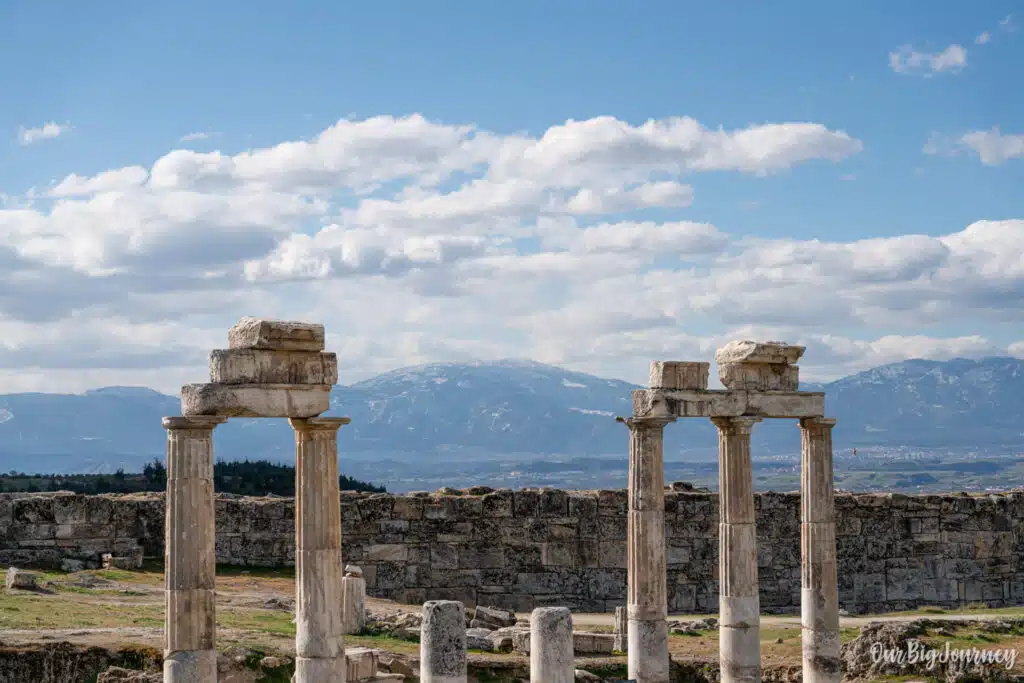

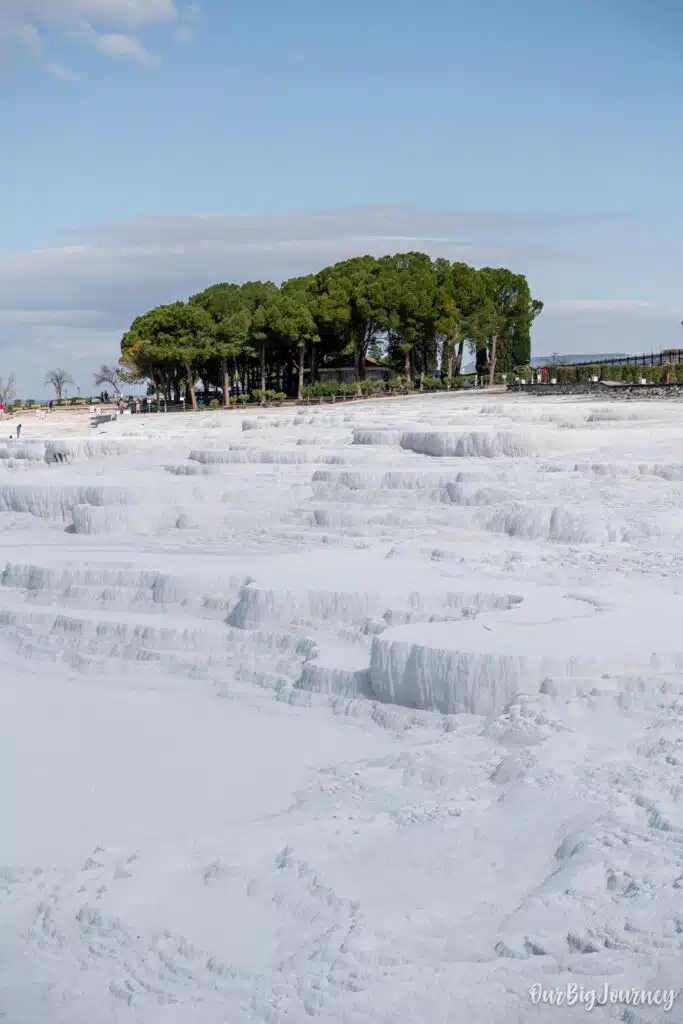
Table of Contents
What Is Pamukkale?
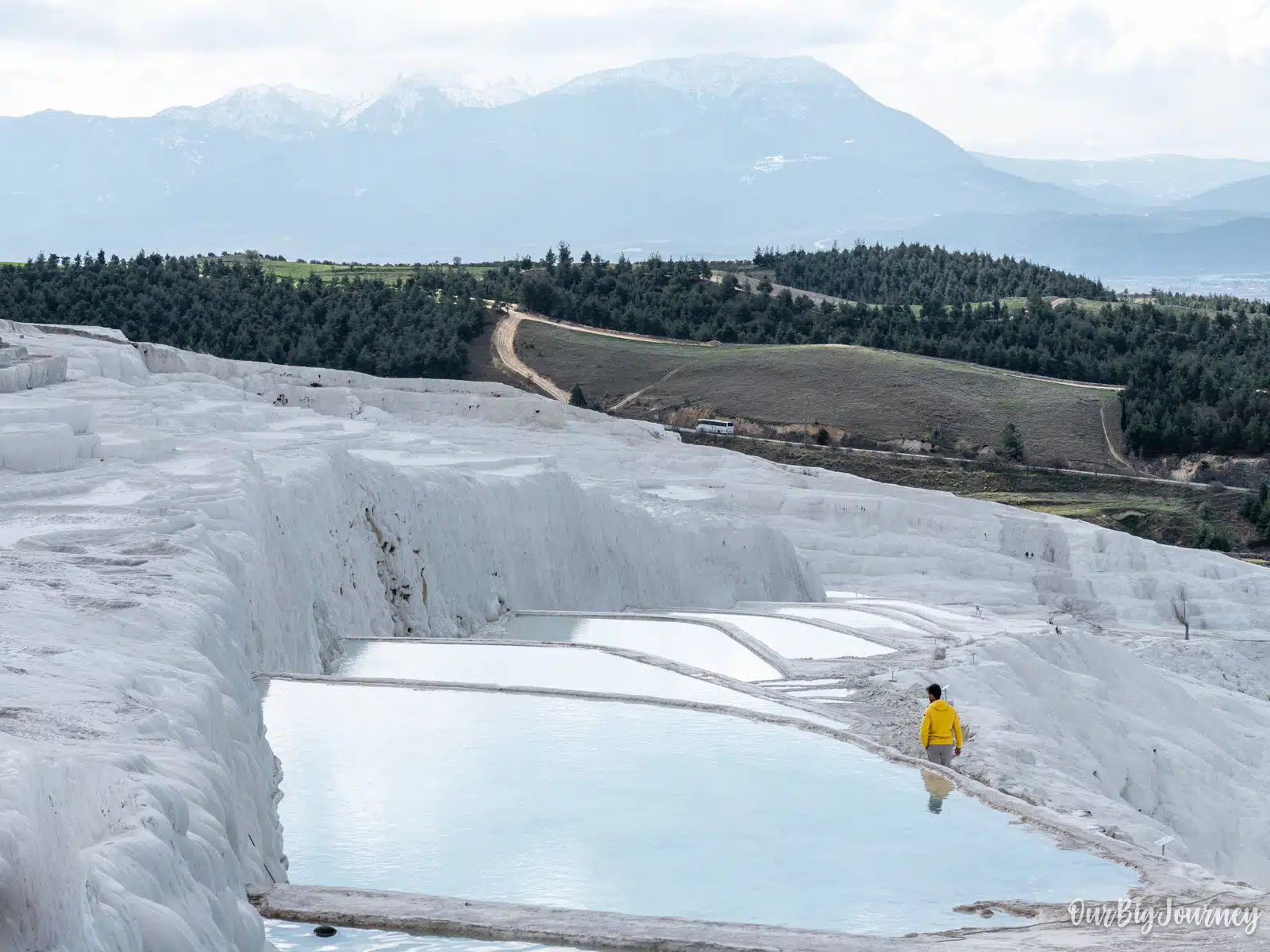
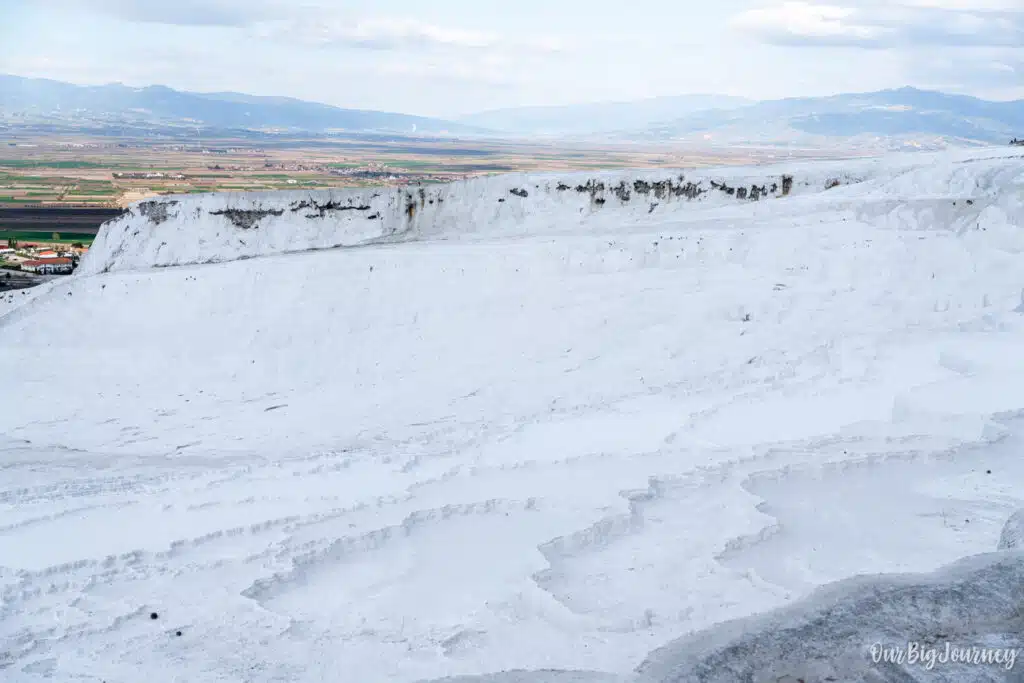
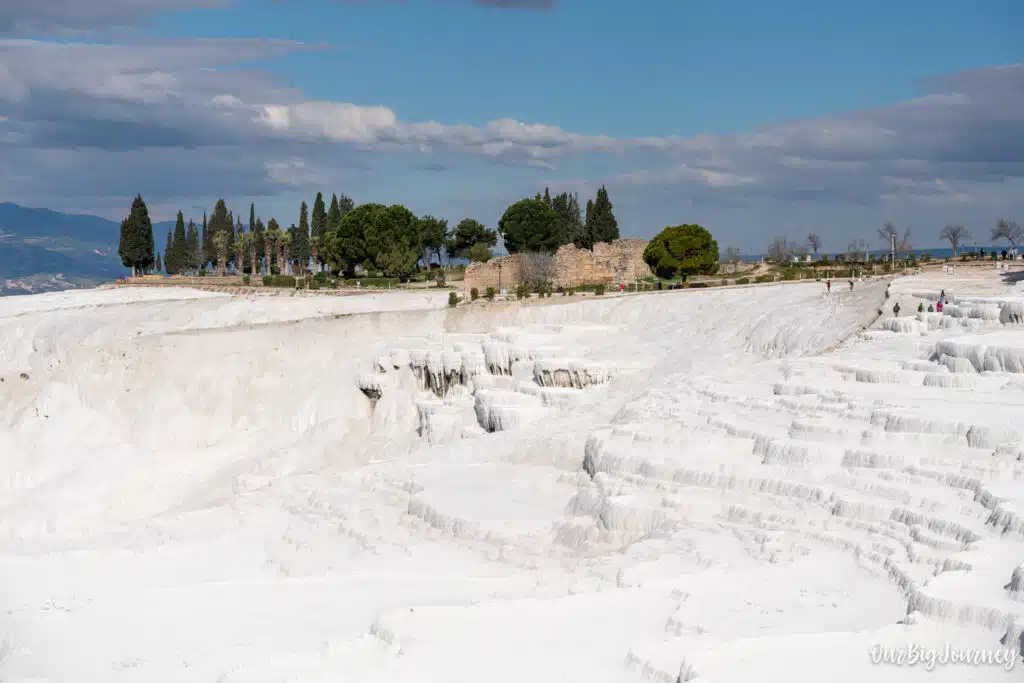
Pamukkale means “Cotton Castle” in Turkish, and once you see it, the name makes complete sense. The site is a natural wonder made up of bright white travertine terraces. The terraces are shallow pools of warm, mineral-rich water that cascade down a hillside. Over thousands of years, calcium carbonate deposits from the thermal springs have built up these stepped formations, creating a landscape that looks almost too surreal to be real. From distance it looks so unique. When we went there, we could see the side of a mountain with this massive white mass, like a giant piece of wax on the hill.
But for us, what makes it even more special is what sits at the top: the ancient Greco-Roman city of Hierapolis, an archaeological site that once served as a major thermal spa city. Together, they form a UNESCO World Heritage Site, and the combination of natural wonder and ancient history in one place is pretty hard to beat.
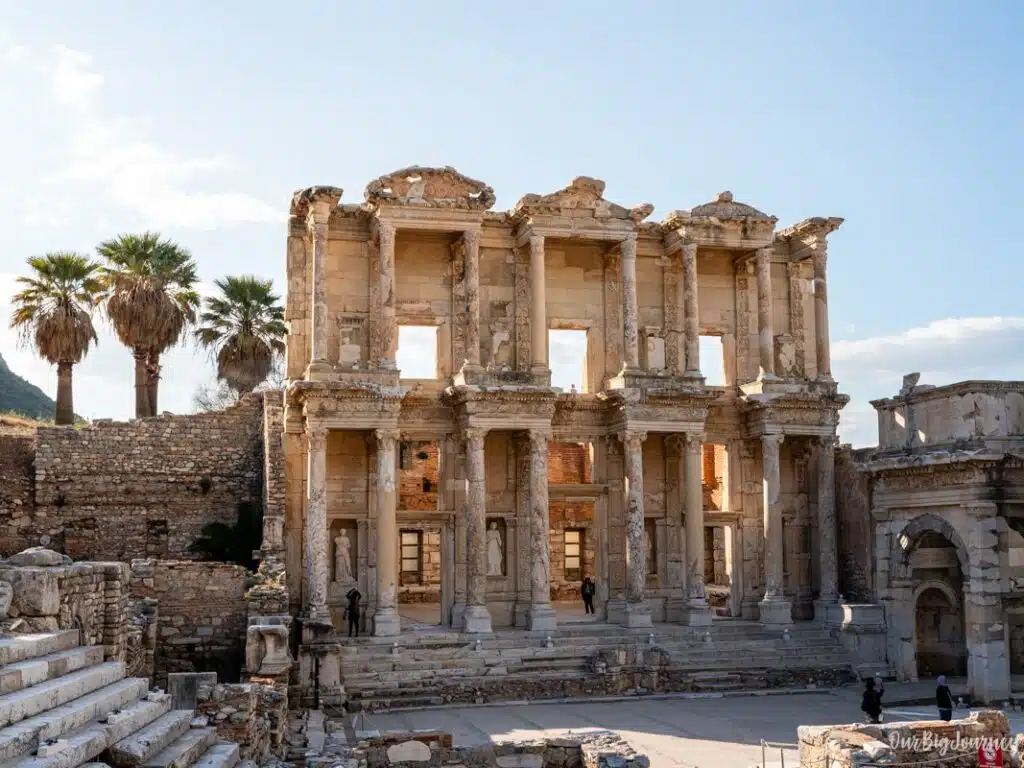
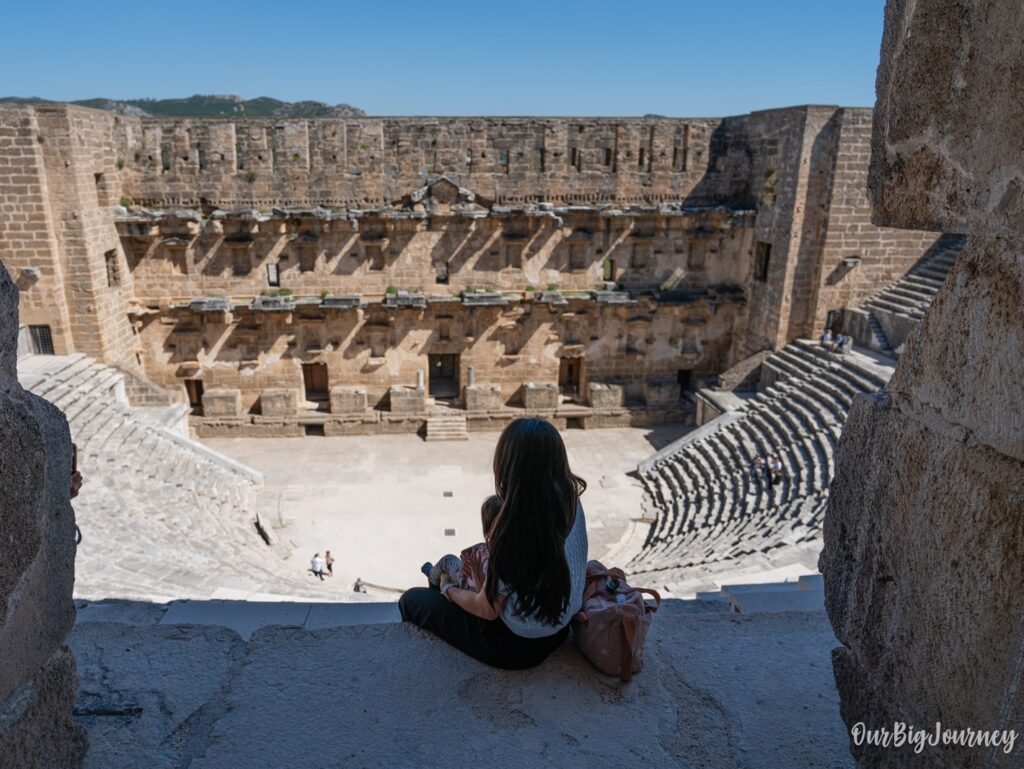
Other Roman cities like Rome itself, had epic thermal baths, and other current cities like Budapest are also spa-cities. But Hierapolis was a city that appeared because of this natural spa was there. This is “Spa City” and gives us an idea about how amazing the Ancient Rome was. Turkey is full of incredible ancient sites like this. We also loved Ephesus and explored the Roman theatre at Aspendos. Places that we highly recommend to visit.
Walking the Travertine Terraces
This is the part everyone comes for, and our opinion is okay. You have to take your shoes off at the bottom (this is mandatory) and walk barefoot up through the pools. The water is warm, milky turquoise, and surprisingly shallow in most areas. The terraces look like something fake, but they are so unique. I was marvelled by the natural formation and how they are displayed. What we didn’t like were the group tours that started to arrive after us. I also liked that you can visit them and they add water, like in the old times.
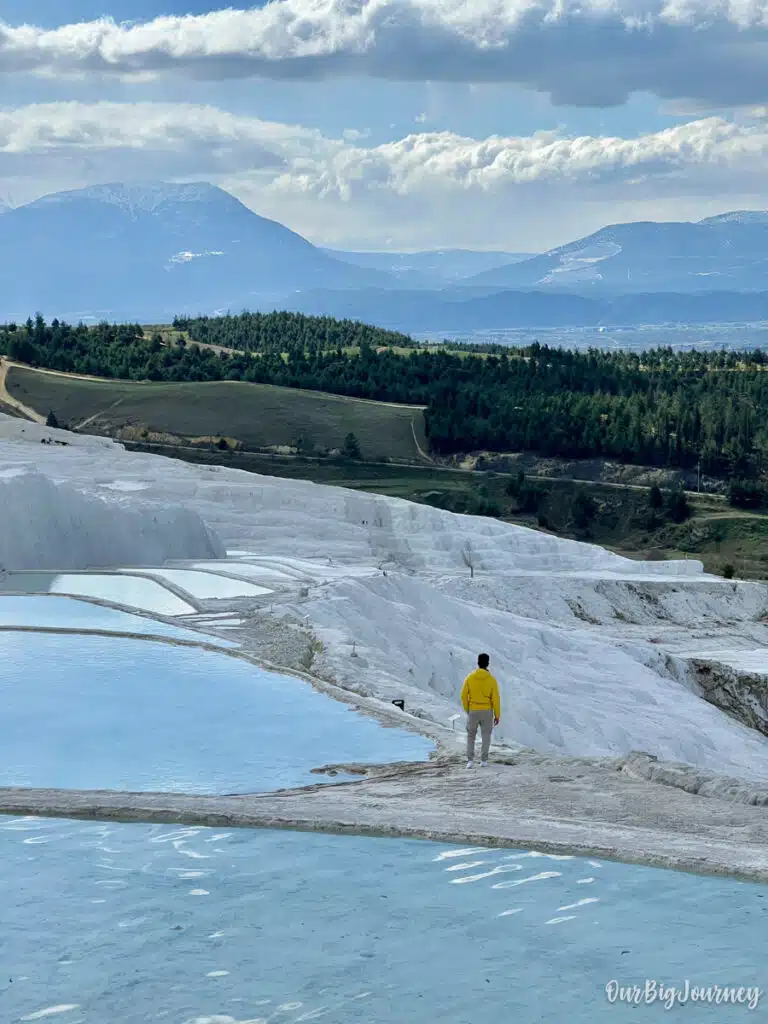
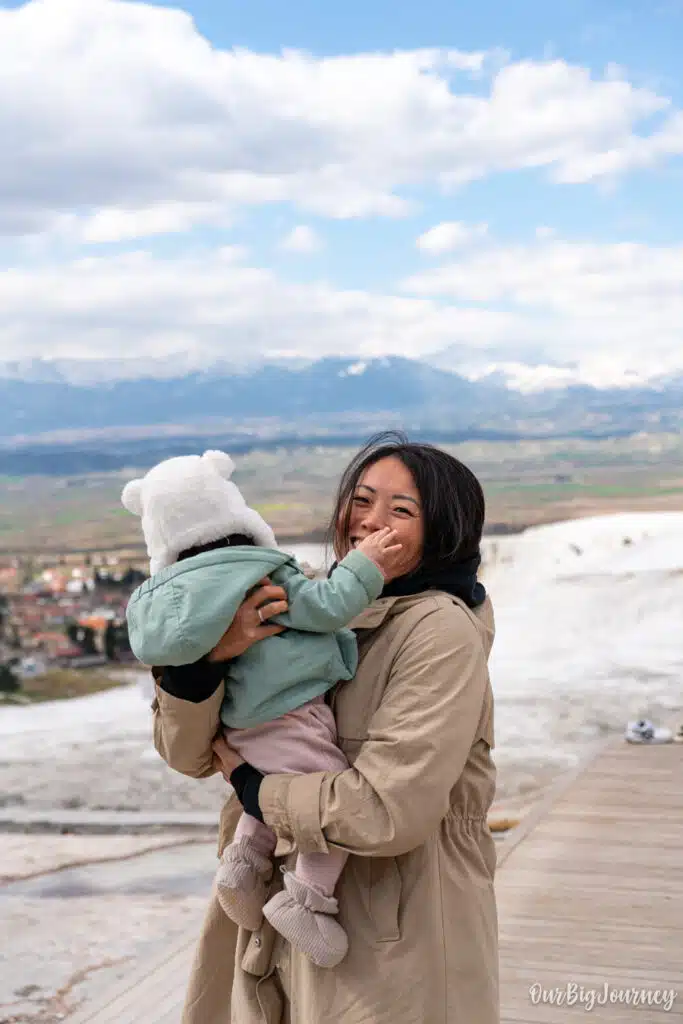
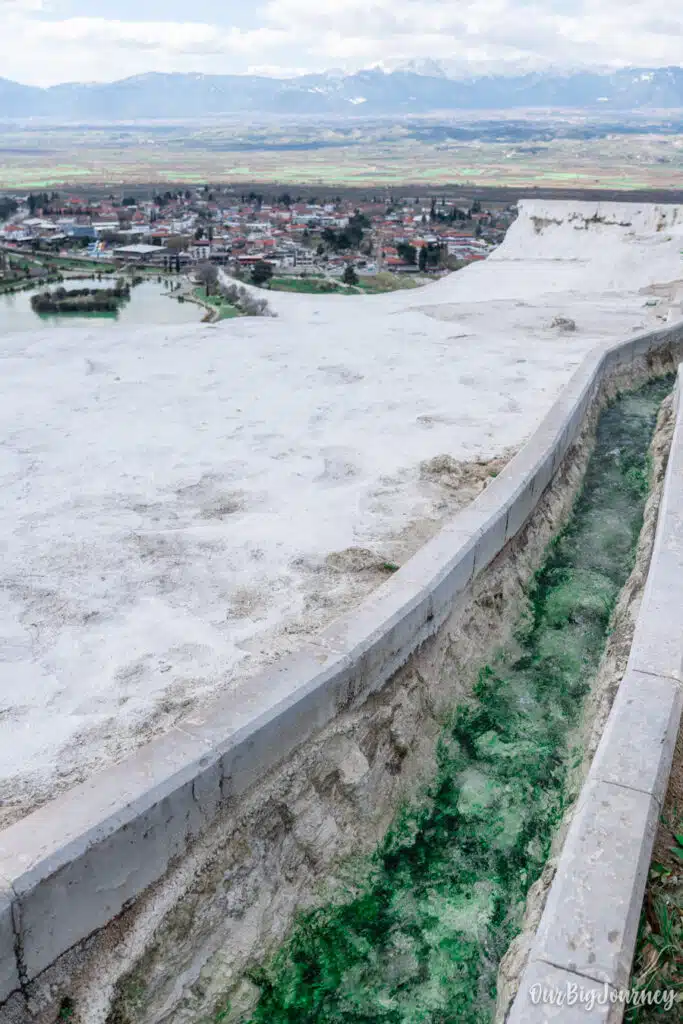
A few things worth knowing before you step in:
- Go early or late. Midday in summer is really hot and the site gets very crowded. We’d recommend arriving right when it opens at 6:30 AM for the best light and the fewest people, or heading up in the late afternoon. We went there around 8:00 in April (when they opened that month) and at 9:00 we saw many more people coming from buses.
- The terraces vary by season. Water flow and pool levels change throughout the year. Spring and early summer tend to offer the most photogenic conditions with fuller pools.
- The ground is uneven. It’s a natural formation, so some sections are rough underfoot. Take your time and watch your step. If you want to take photos in the water, you have to walk.
- Bring a dry bag or waterproof pouch for your phone and camera. You’ll want them with you, but things can get wet.
Going to Pamukkale and Hierapolis with kids
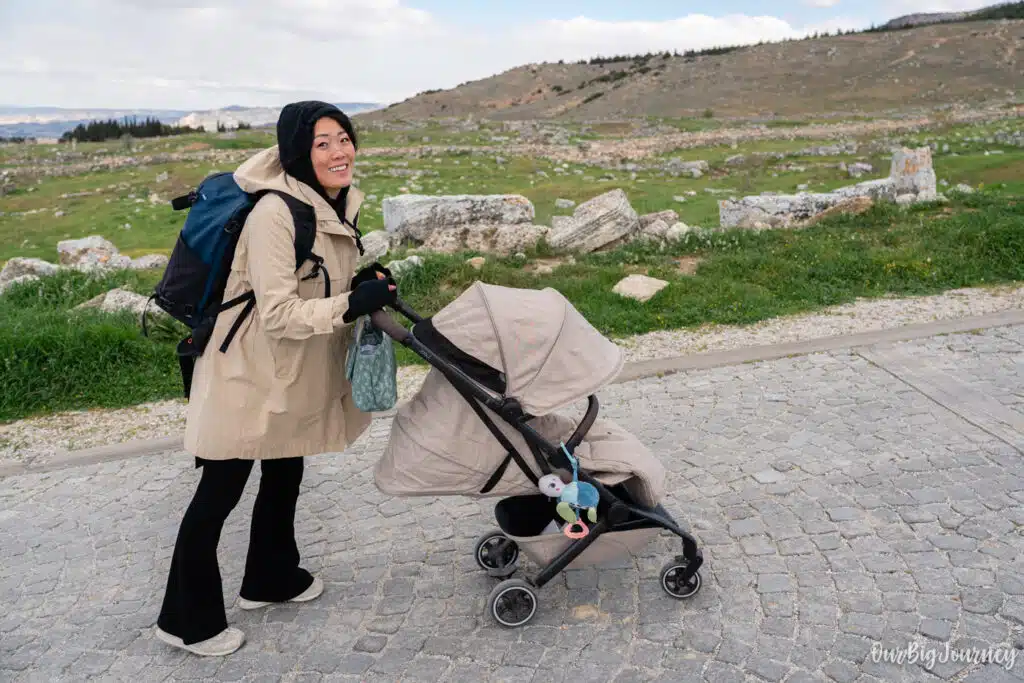
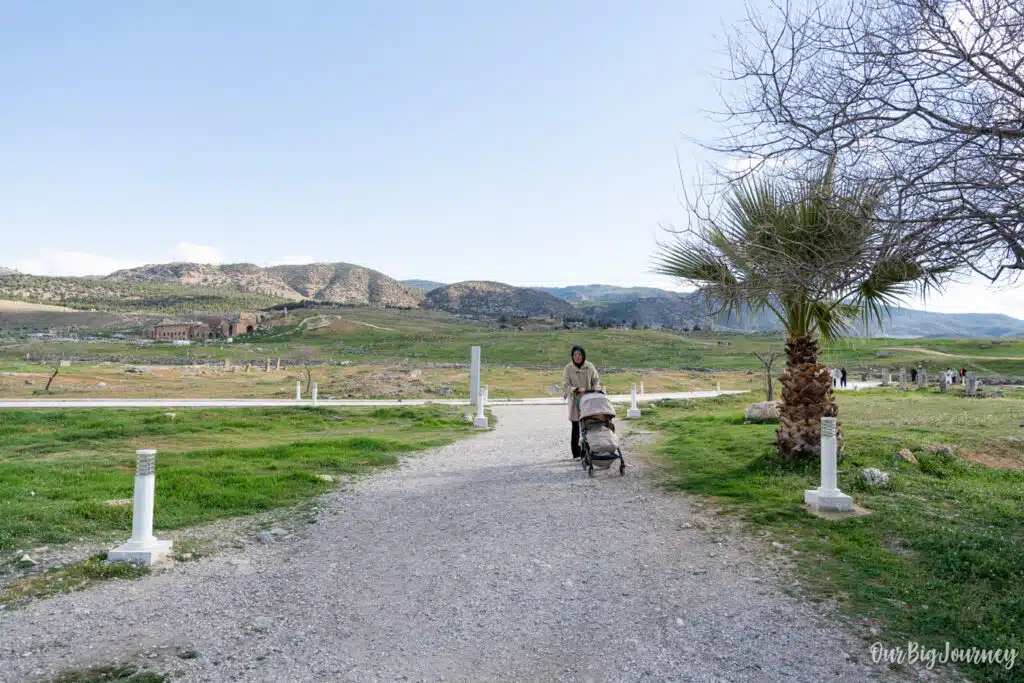
Can you actually go with kids to Pamukkale or / and Hierapolis? Yes! But there are things to consider before you go.
- If you go with newborns or babies, like we did, it’s important to know that the paths aren’t well adapted. While the place is mainly flat, there are also hills and graved trails to walk through. So make sure your wife goes to CrossFit.
- In case you’re going with toddlers: watch their steps really well. There are many rocks and columns in Hierapolis and the terrain is uneven. At the cotton terraces make sure they are safe. They are like big stairs and they could fall down a few meters.
- Going there with kids: control them and explain them history!
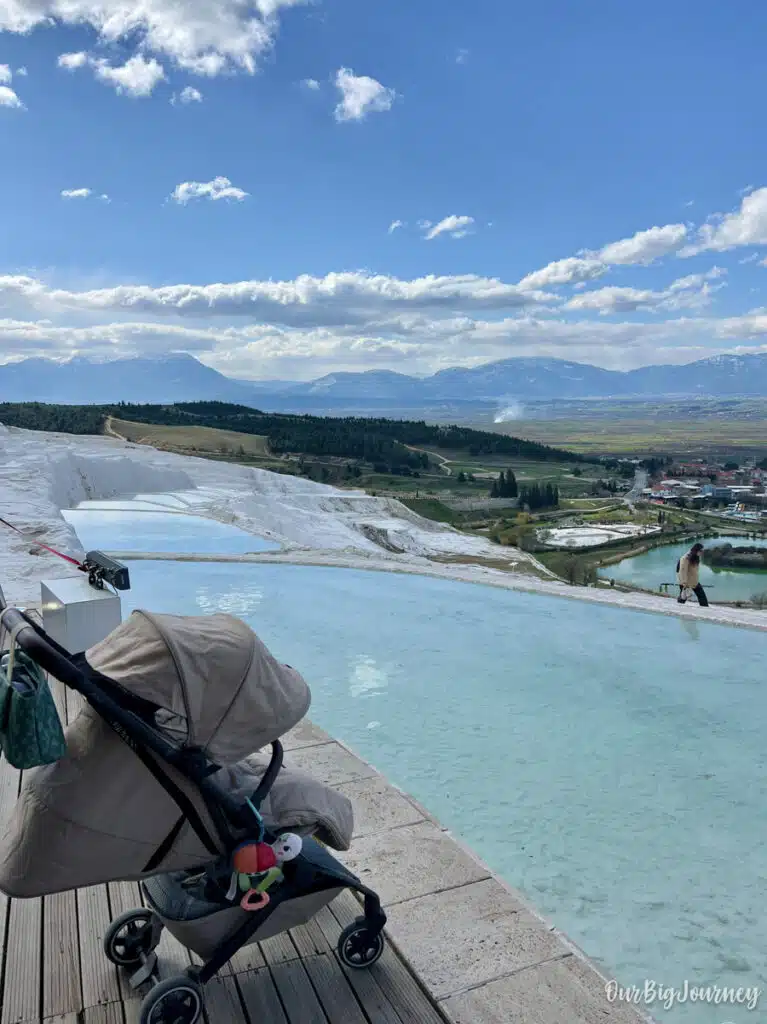

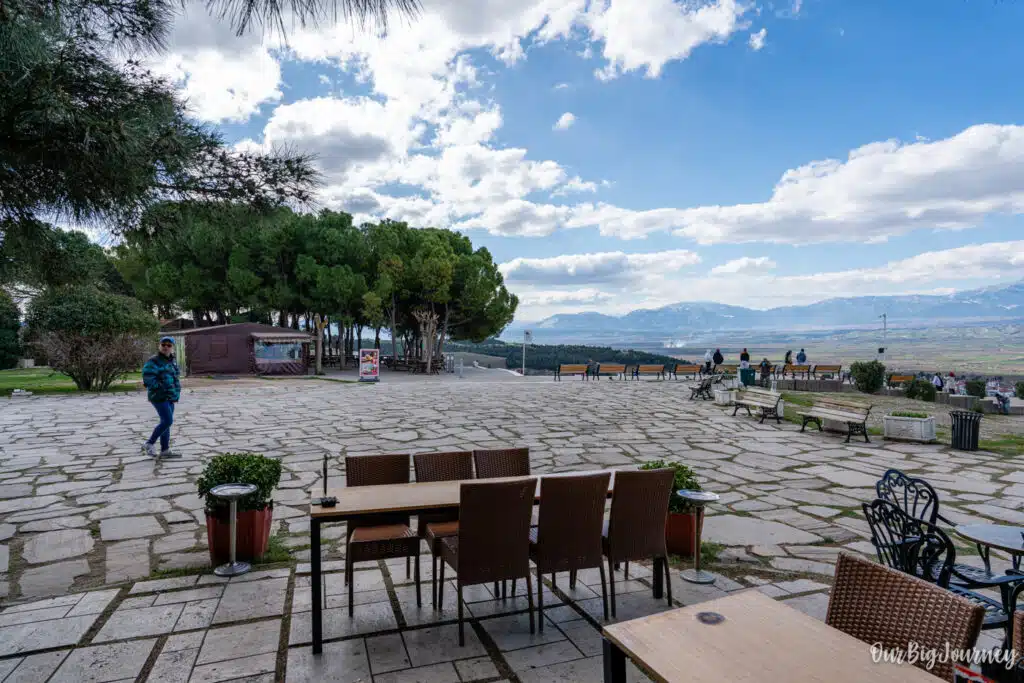
Is there a restaurant in Pamukkale?
There are souvenirs store at the main entrance and some sell some basic snacks. There is a coffee-bar that sells drinks and some sandwiches, but you won’t find restaurants. The same goes for the WC, they’re quite limited.
Exploring Hierapolis
Once you’ve made it up the travertines, you’re standing at the entrance to Hierapolis, and it’s enormous. Most people don’t realize just how much there is to explore because they just come for the photos at the terraces… But budget at least 1 one to walk around it, and more if you don’t visit Ephesus in your trip.
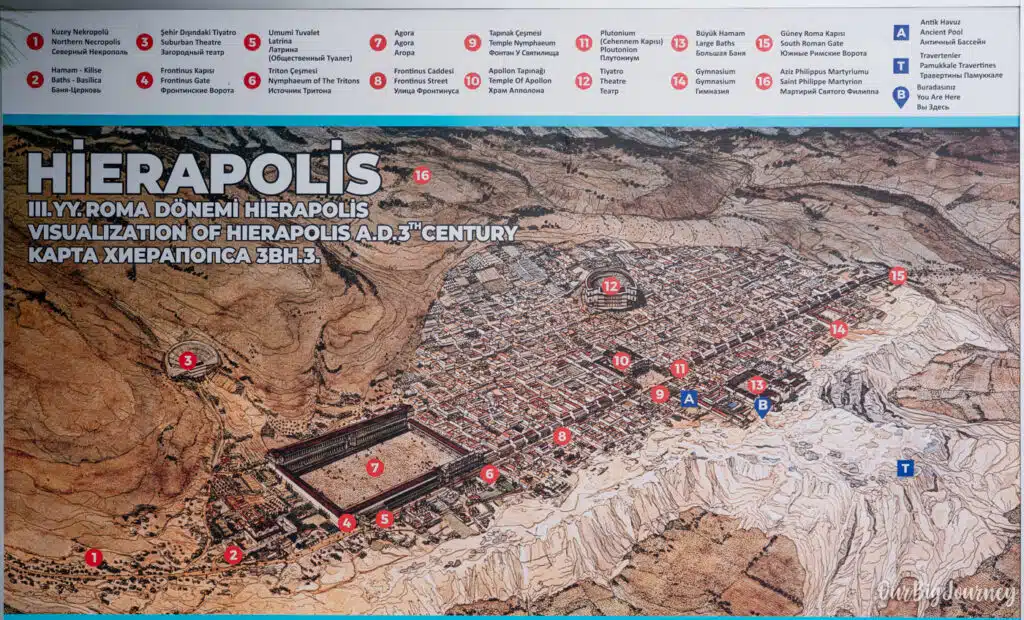
What surprised us the most about visiting Pamukkale and Hierapolis, was the fact that a huge Roman city was there, taking advantage of the pools and thermal waters… With a theatre, streets… I liked the feeling of being there and imagining life in those years. In Hierapolis you can visit places like:
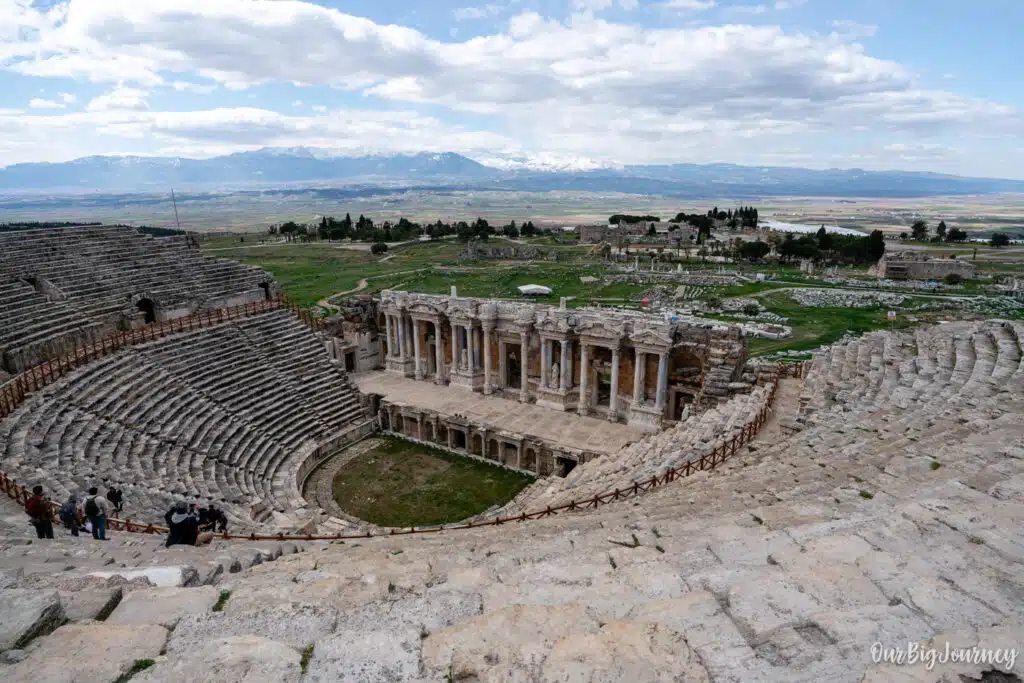
The Roman Theatre
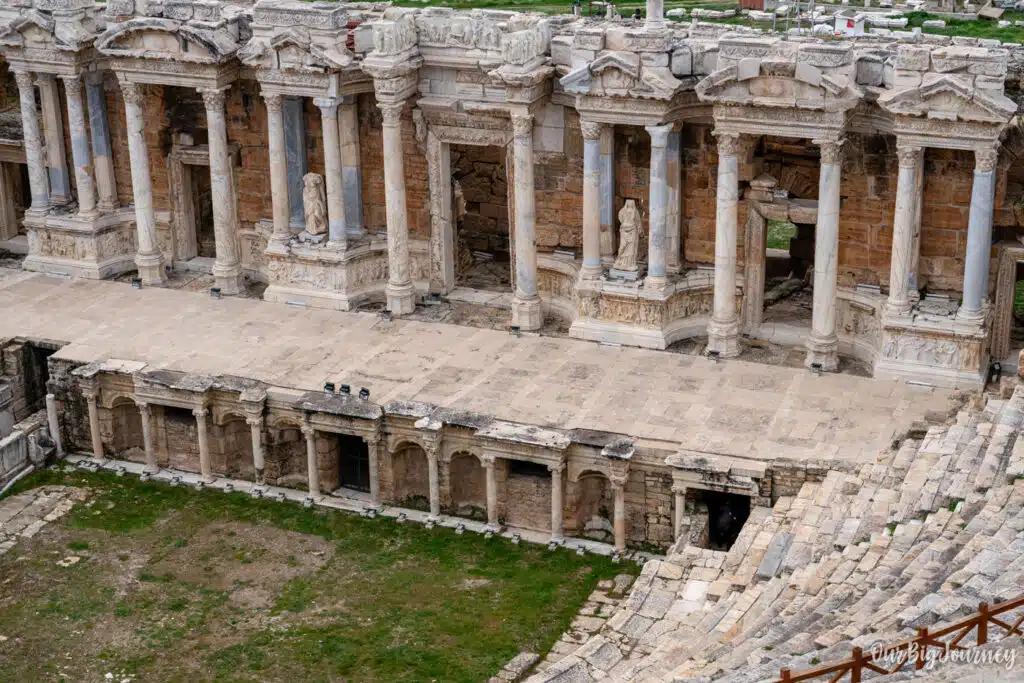
One of the best-preserved Roman theatres in Turkey, and the views from the upper seats looking out over the travertine plateau are absolutely stunning. It’s a great spot to take a breath and take it all in. Totally recommended and a must if you don’t visit Aspendos.
Cleopatra’s Antique Pool
A favourite hidden gems at the site that was closed when we went. You can actually swim in a thermal pool surrounded by submerged ancient Roman columns. It costs an extra €6 on top of the entrance fee, but people seem to like it. The water is warm, slightly fizzy from the minerals, and floating around ancient ruins has to be a pretty surreal experience.
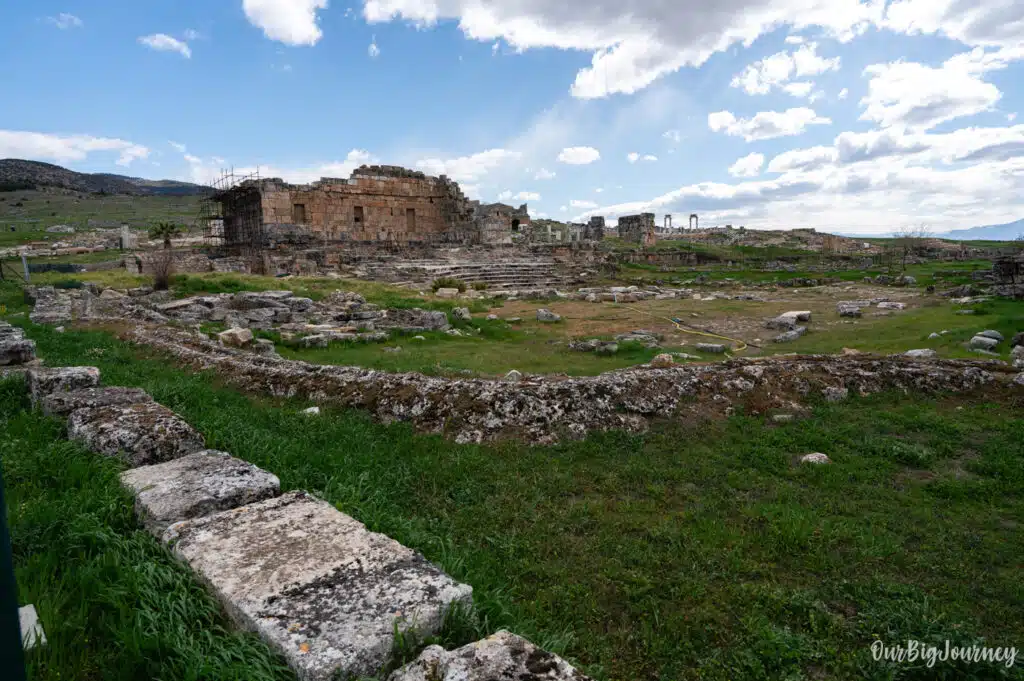
The Necropolis
Hierapolis has one of the largest ancient necropolises in the world, stretching for over 2km. There are hundreds of well-preserved sarcophagi, tombs, and monuments scattered across the hillside.
The Archaeological Museum
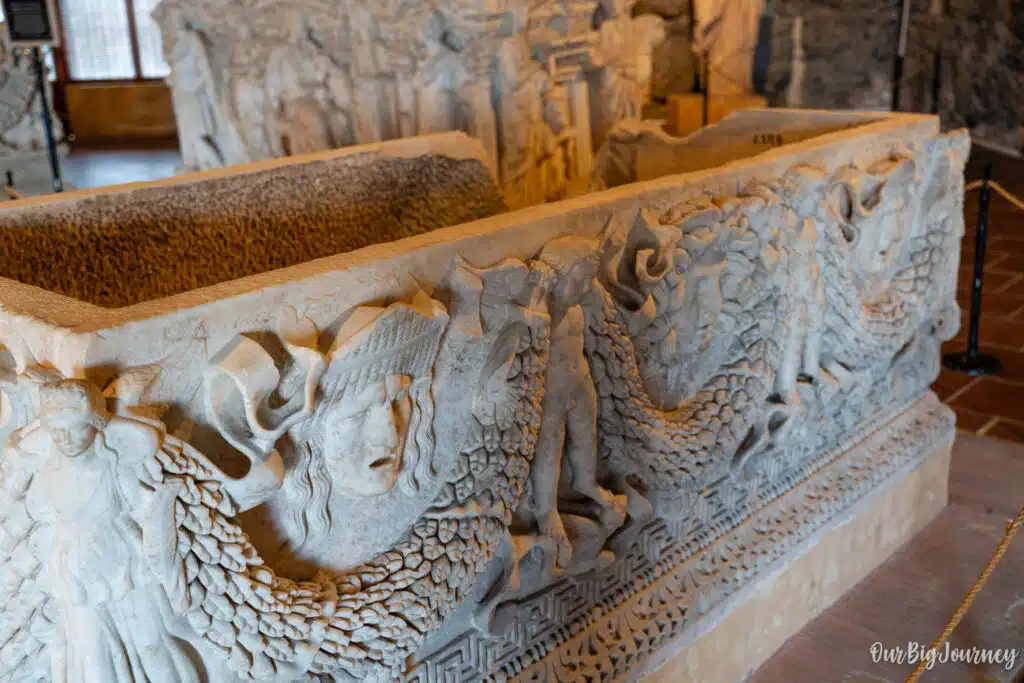
Housed in the old Roman baths, the museum contains a solid collection of artefacts excavated from the site. It’s included in the entrance ticket and worth a look, especially if you want more context for what you’re seeing around you.
Practical Information
Getting There
Pamukkale is located about 20km from Denizli, which is the main transport hub for the area. You can reach Denizli by bus, train, or domestic flight from most major Turkish cities. From Denizli, take a dolmuş (shared minibus) from the bus station — it takes around 30 minutes and is very affordable.
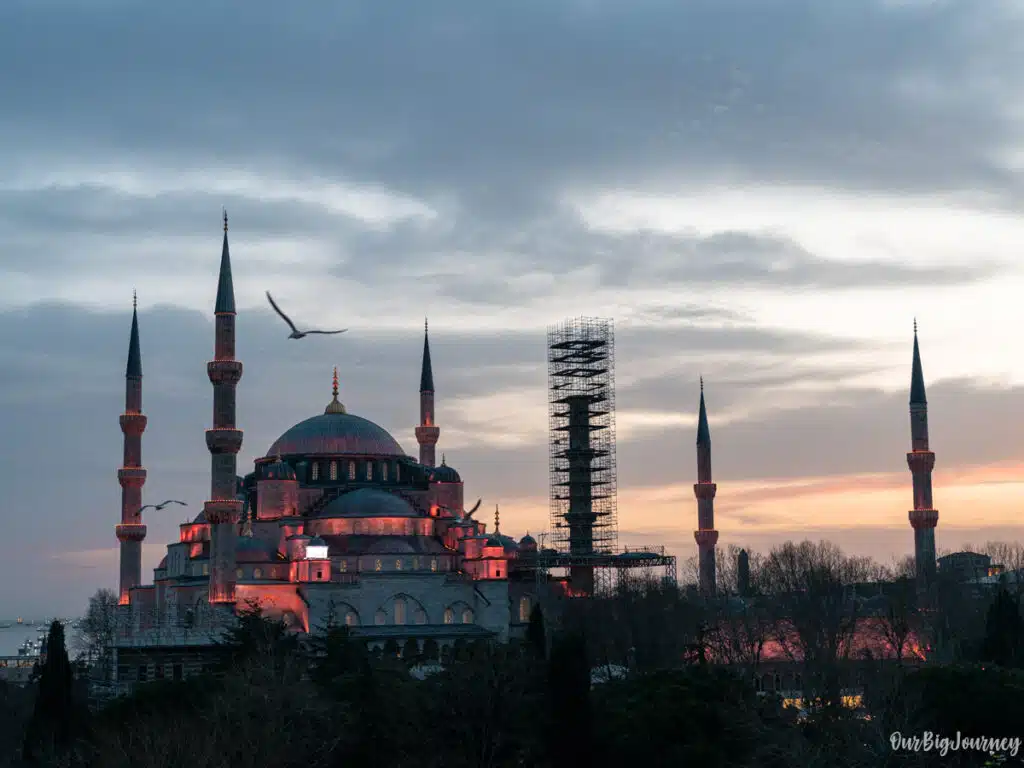
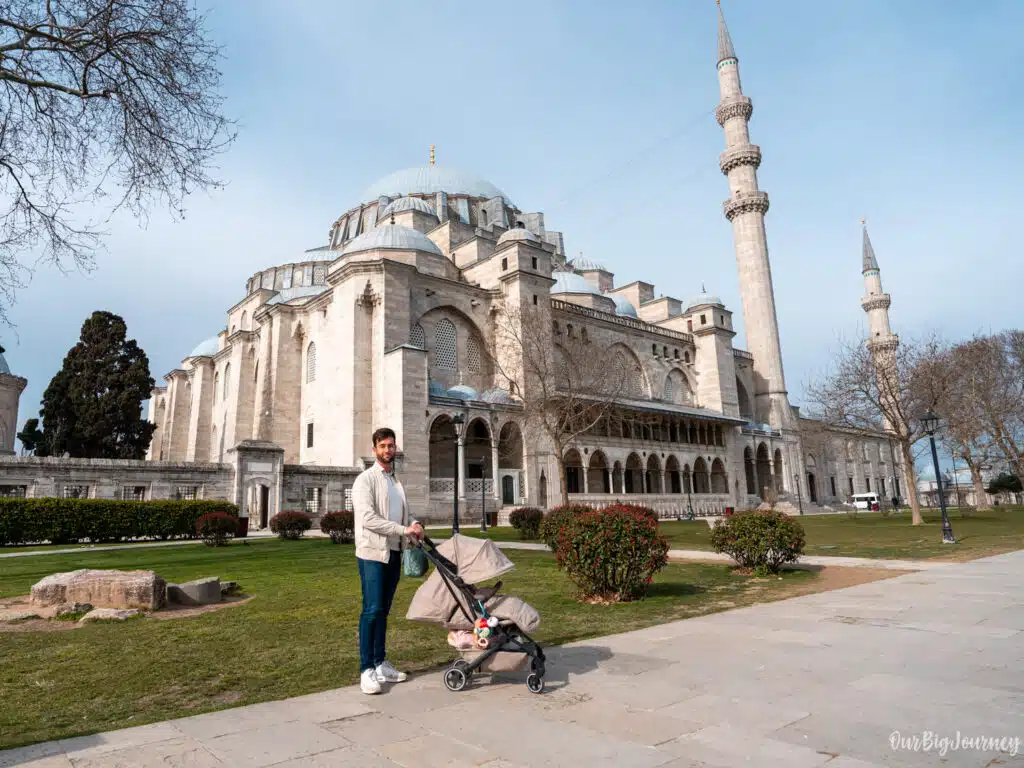
What we did, as many visitors also do, was driving from Antalya (about 3.5 hours). You can go by yourself (independently) or on an organized tour. If you’re building a longer Turkey itinerary with Istanbul as your base, check out our guide to the best mosques in Istanbul, where we went with our baby Lara.
Entrance Fees (2026)
- Combined Pamukkale + Hierapolis ticket: €30 per adult (children under 8 free, reduced rates for ages 8–12)
- Cleopatra’s Antique Pool: additional €6
- Museum Pass Türkiye: €165 for 15 days, covers entry to 350+ museums and sites across Turkey. Worth it if you’re doing a longer trip
Opening Hours
They can vary a bit depending on the year, but usually are:
- Summer (April–October): 6:30 AM – 9:00 PM
- Winter (November–March): 8:00 AM – 6:00 PM
How Long Do You Need?
A full morning (4–6 hours) is ideal to cover the terraces, Hierapolis ruins, Cleopatra’s Pool, and the museum comfortably. You can do it in half a day as we did and it didn’t feel like we were rushing. If you’re into history a lot and want to explore all the details, then stay one full day. Hierapolis is very extensive.
Tips for Photographers
With so much to work with here, it’s one of the most photogenic destinations in Turkey. A few things that can make a big difference for best photos:
- Golden hour on the terraces is magic. The white calcium reflects the warm light beautifully, and the long shadows add depth to the textures.
- Early morning means no crowds. If you want unobstructed shots of the pools, being there at opening time is essential in high season. Otherwise, prepare for group tours and even tripods…
- Shoot from the top looking down for the classic cascading terrace view.
- Don’t forget the theatre! The combination of ancient stone and the white plateau in the background is a shot not to miss.
Our opinion on Pamukkale
I’m going to be really direct: I wouldn’t go to Pamukkale just for the photos or in a group tour without a guide. I think Pamukkale has to be understood and admired, more than photographed in typical photos. What makes this place unique is the concept of Spa-city of Hierapolis (that many people don’t even visit) that lays around a wonderful natural formation.
The terraces are amazing, don’t get me wrong, but being a touristy location doesn’t help to enjoy its natural origins. Our recommendation for this place would be: make it a part of your Turkey itinerary if you have time to spend there by your own or you go with a guided tour (or get a guide there) and skipping busy hours. Otherwise… I would focus on Ephesus as an historical destination.
Pamukkale and Hierapolis is one of those places that belongs on every Turkey itinerary. Whether you’re here for the history, the photography, the thermal waters, or just to tick off a proper bucket-list destination — it delivers. Just go early, take your shoes off, and enjoy it.
Have you visited Pamukkale? We’d love to hear your experience in the comments below. And if you’re planning a trip to Turkey, check out our other guides to help you make the most of it.
Check all our posts about Turkey: