Visiting Aspendos theatre in Turkey | Guide on the best preserved Roman theatre
By Roberto (Updated May 26)
⏱️ 6 minutes
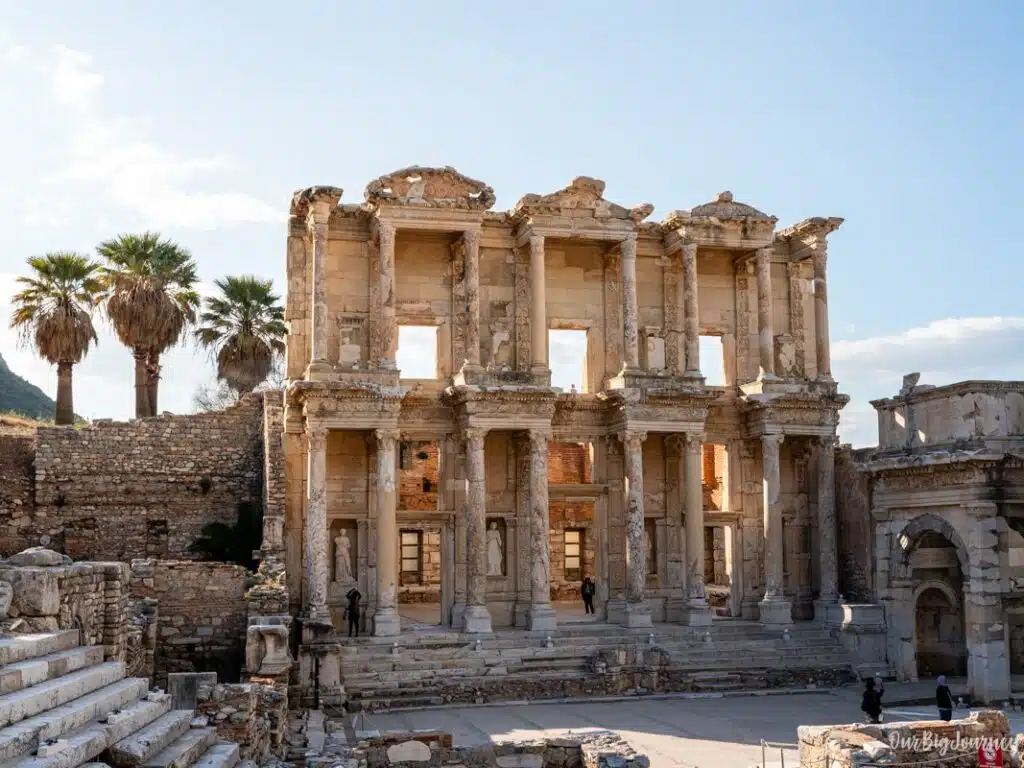
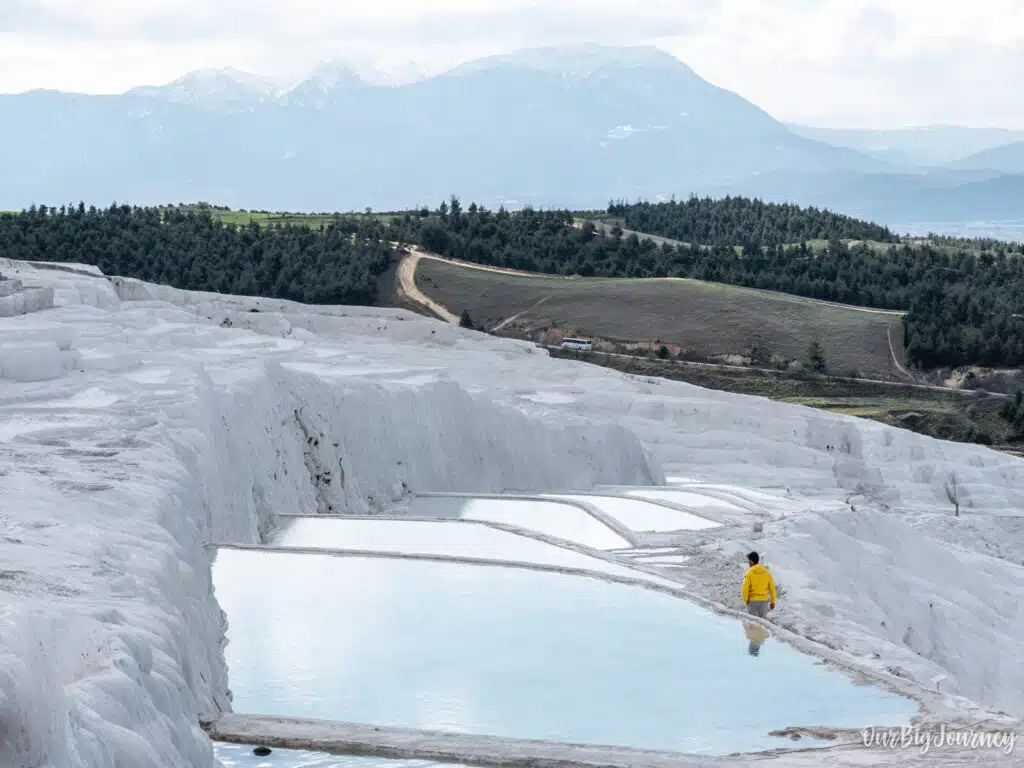
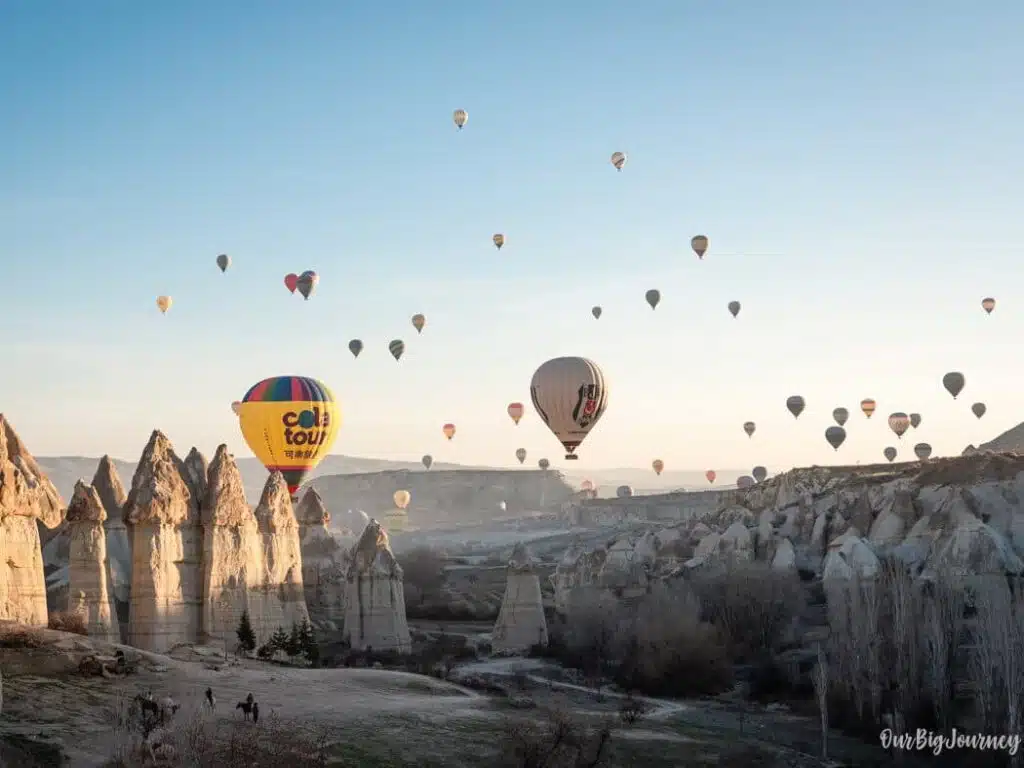
When we did our road trip in Turkey, we visited some of the must visit places there, like Ephesus, Hierapolis and the Cappadoccia region. Another famous place in this country that surprised us is what’s considered by archaeologists and historians to be the best-preserved Roman theatre in the world: Aspendos Theatre. Sometimes when you visit ruins of the ancient world like the historical sites in Greece or Italy, you can be disappointed. Many tines you pay a hefty entrance fee and arrive at a highly recommended “archaeological wonder” only to find three broken columns or a broken statue…and meanwhile an official tour guide asks you to use your imagination to picture the glory days.
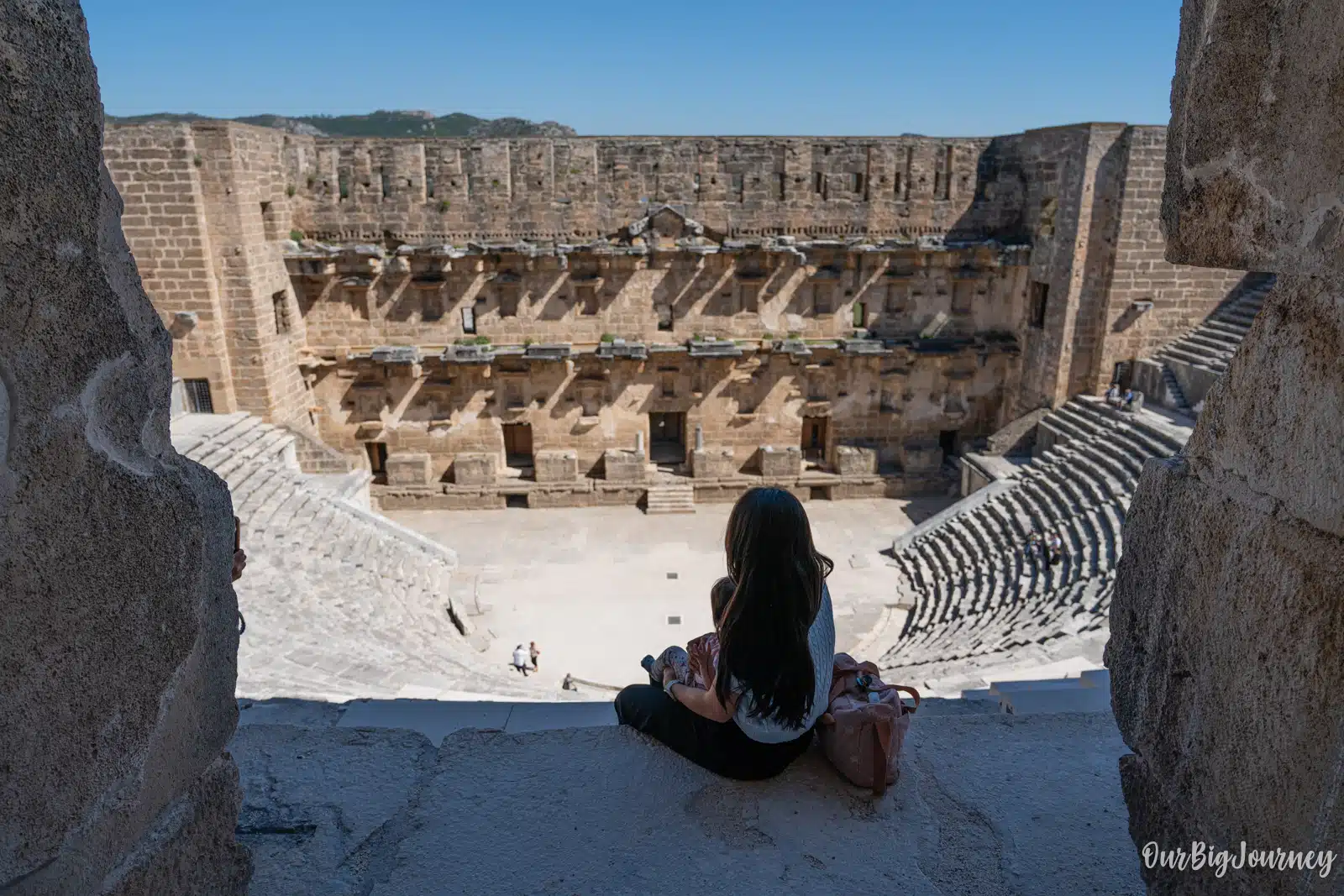
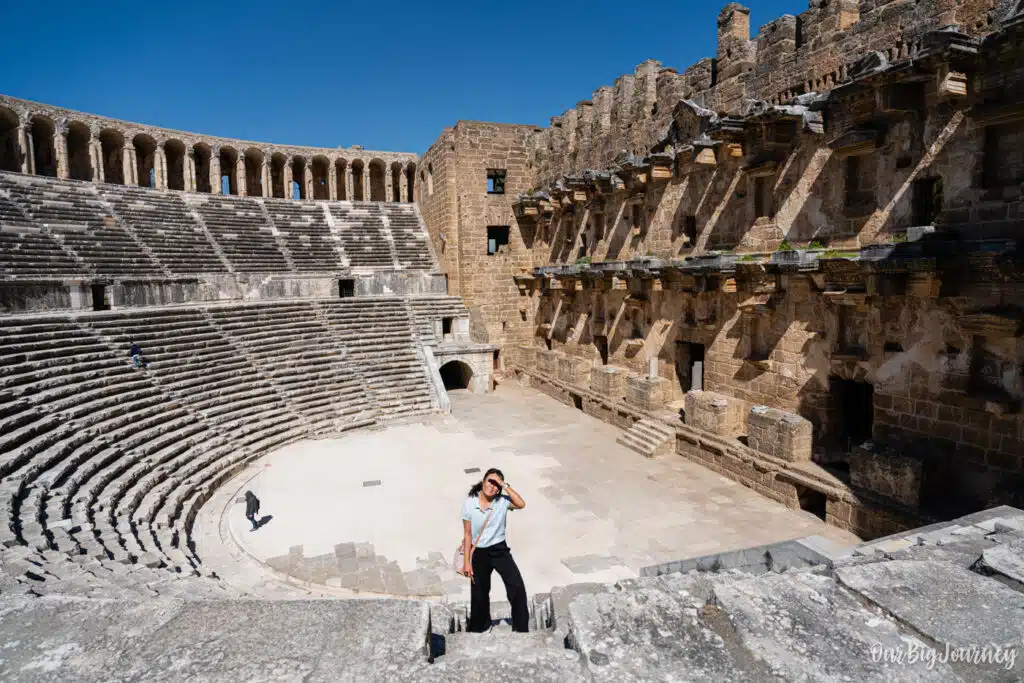
But the Aspendos theatre in Turkey requires zero imagination. Aspendos is home to a monolithic, imposing, and amazing intact structure. It doesn’t look like a ruin; it looks like a functional stadium. If you only have the energy to look at one more ancient site in Turkey before abandoning the idea, this should be the one.
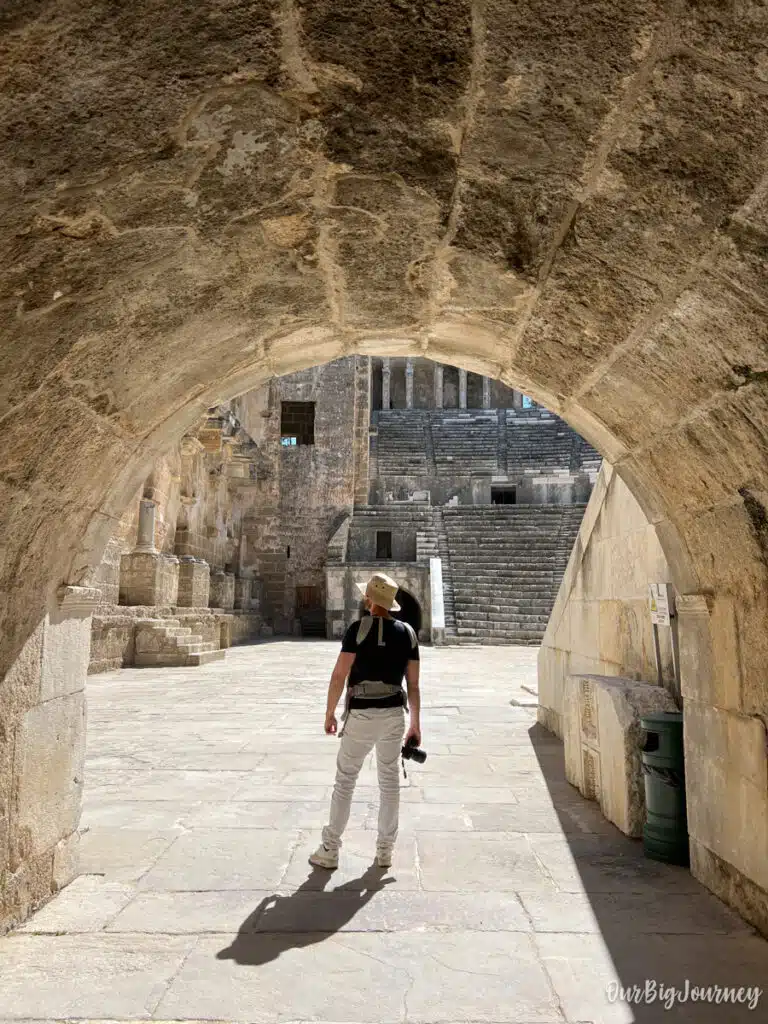
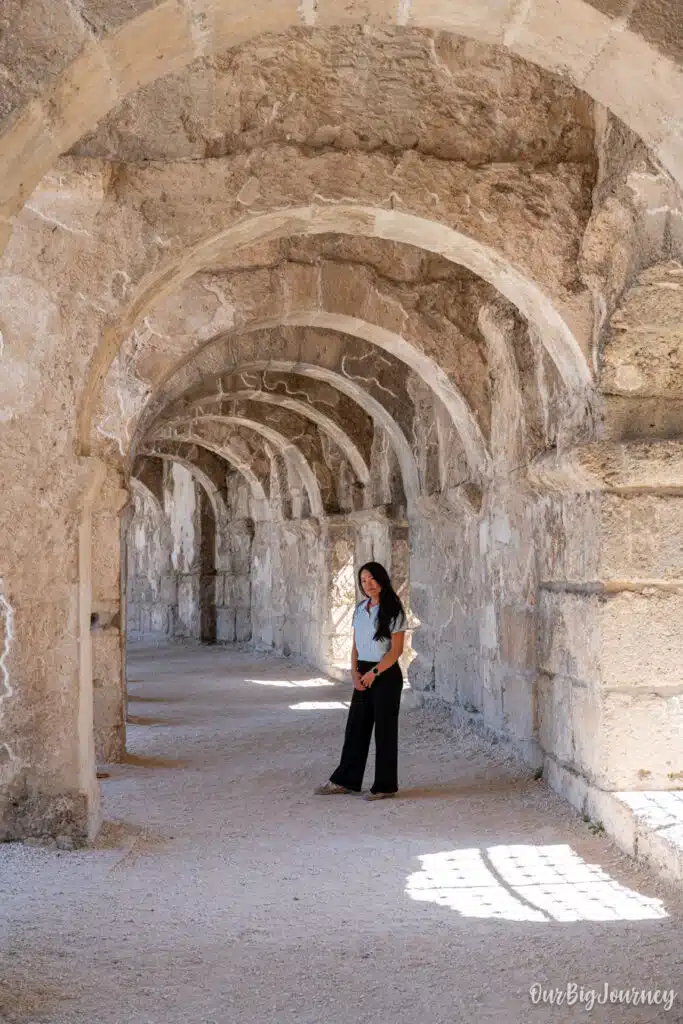
Table of Contents
What is Aspendos theatre?
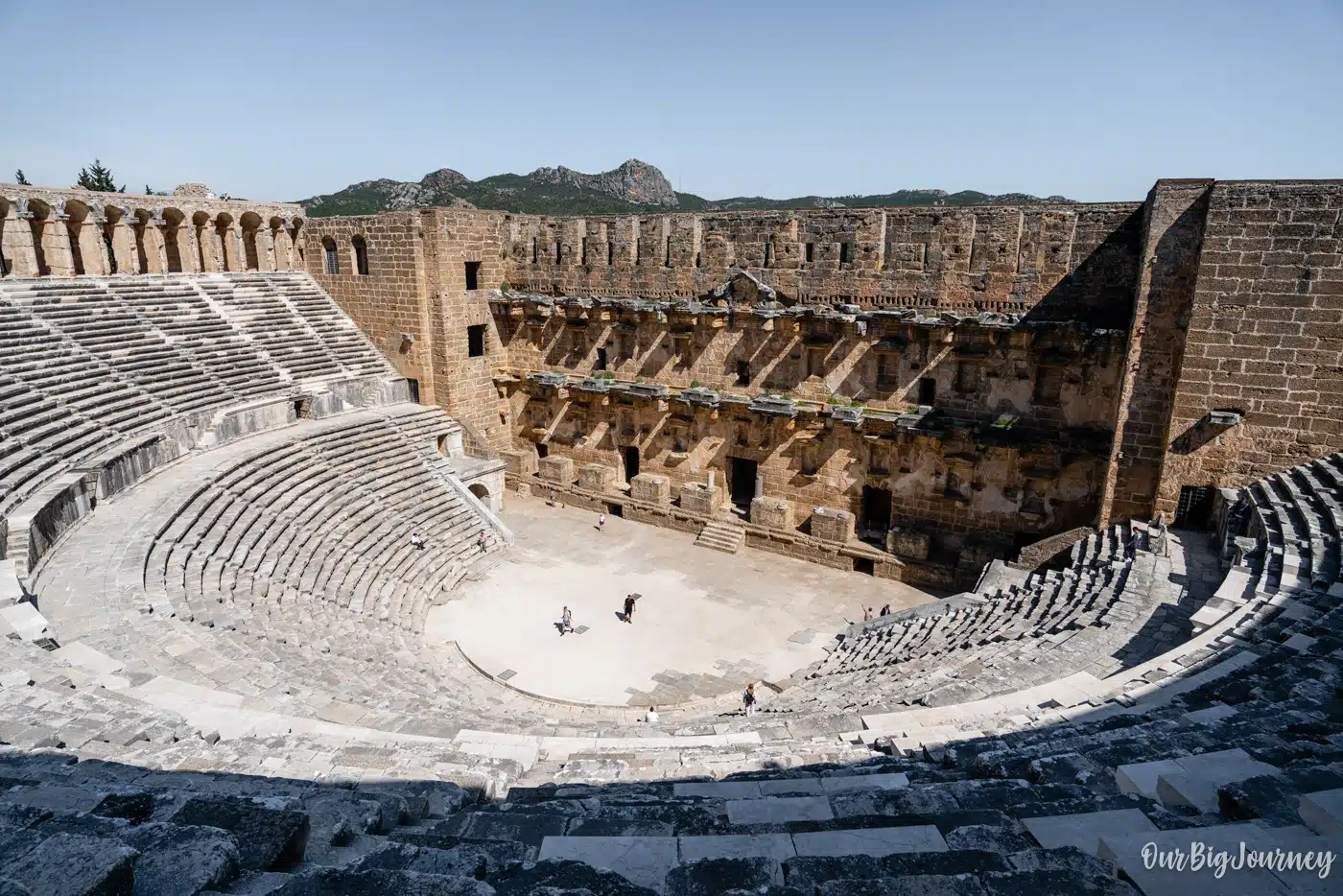
The Aspendos Theatre, located 45 kilometers east of Antalya, is widely considered as the best-preserved Roman theatre in the world. Built between 161 and 180 AD under Emperor Marcus Aurelius, it was designed by a local architect named Zenon. Aspendos stands virtually intact, allowing visitors to experience a Roman stadium exactly as it looked nearly 2,000 years ago. We can find other Roman theatres in Spain like the one in Merida or Cartagena, but nothing looks like Aspendos.
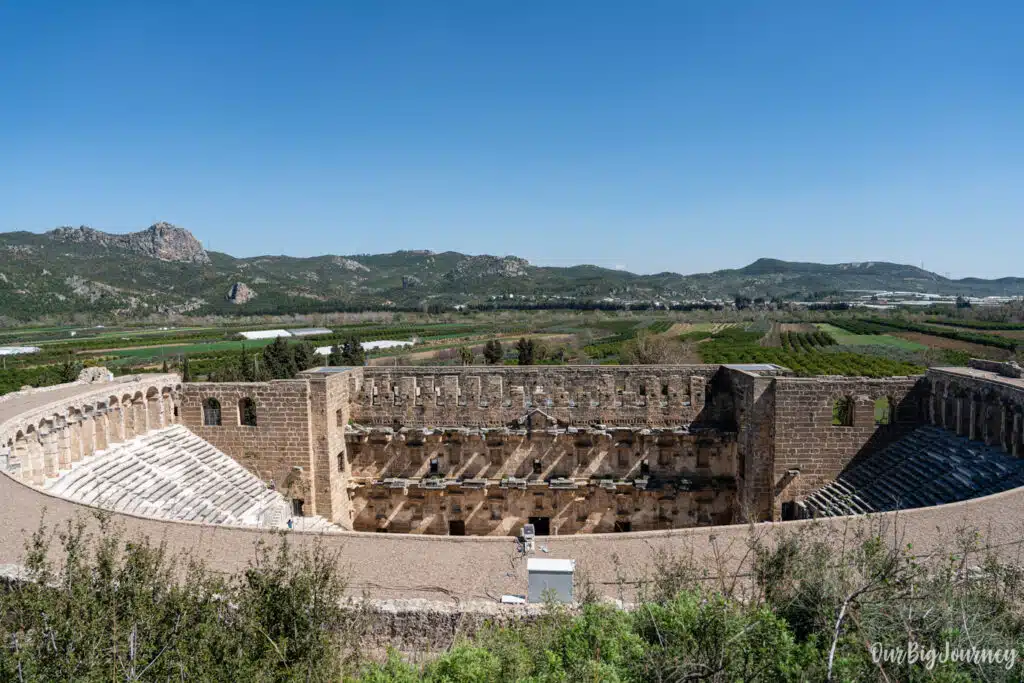
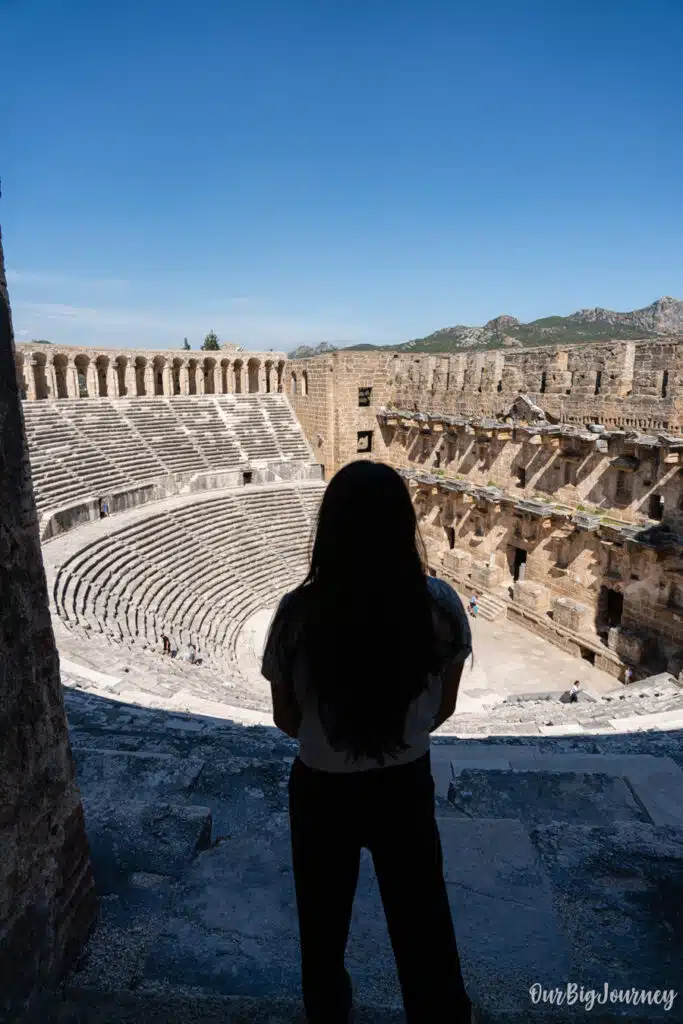
The structure owes its survival to the 13th-century Seljuk Turks, who converted the massive stage building into a fortified palace rather than tearing it down for bricks (a normal habit of the past). Because it was continuously maintained, its arches and limestone seats (which once held 12,000 spectators!) never collapsed. Today, it remains a masterpiece of ancient acoustic engineering where performances on stage can be heard clearly in the top row. It still hosts massive live performances like the Fire of Anatolia dance show at night.
Why did they build Aspendos theatre?
According to local legend, the Ruler of Aspendos held a competition: whoever built the most useful structure for the city would win his daughter’s hand in marriage. One engineer built a massive 15 km aqueduct, a brilliant feat that still stands nearby. Zenon built the theatre.
The ruler initially favored the aqueduct for obvious practical reasons. However, while standing at the very top row of the newly completed theatre, he heard Zenon’s voice from the stage below, whispering: “The king must give me his daughter.” The acoustics were so flawless that the whisper landed directly in the ruler’s ear. Impressed by the engineering, the king handed over his daughter. They were married on the stage.
Acoustics and Shows in Aspendos
The Acoustics Test: A Modern Tourism Spectacle
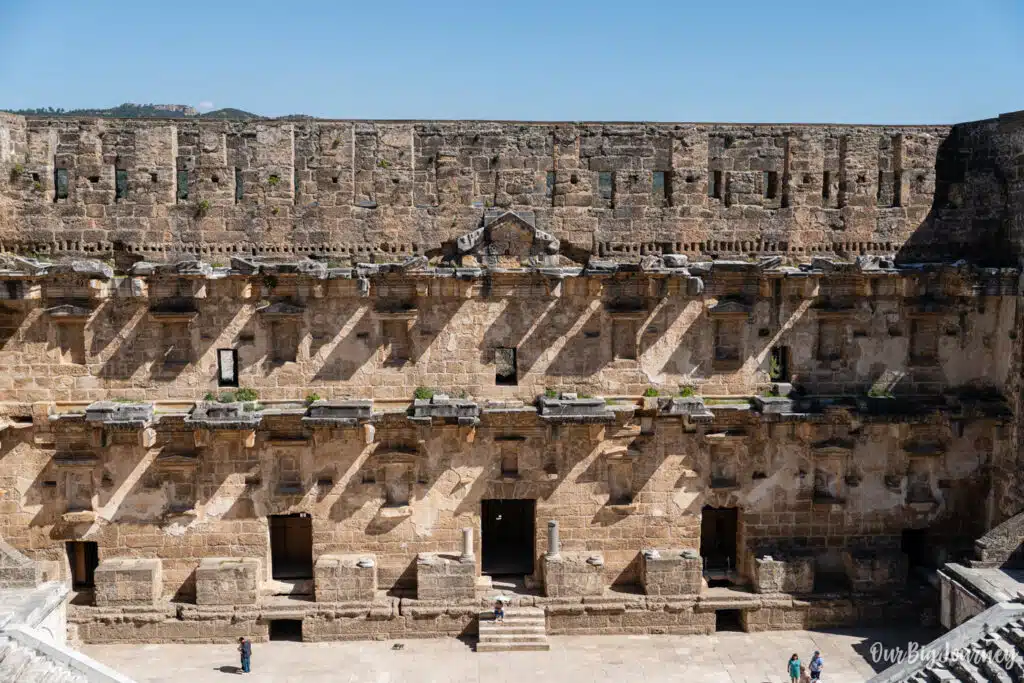
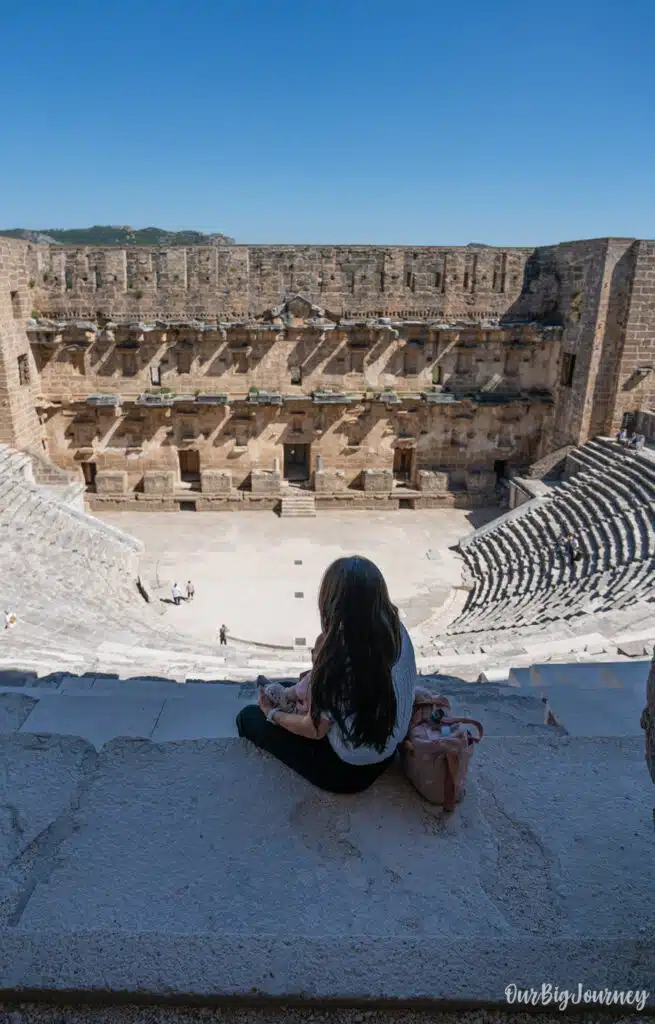
The acoustics at Aspendos are a masterclass in Roman engineering. Because the massive, two-story stone stage wall is completely intact, it acts like a giant sounding board. Combined with the steep, curved limestone seating, sound waves bounce directly upward instead of escaping. A performer can stand on the stage and whisper, and someone sitting in the very top row, 100 feet away, can hear it perfectly. Thanks to its acoustic and perfect conservation state, Aspendos theatre still hosts shows and performances.
The Shows: The Aspendos Opera & Ballet Festival
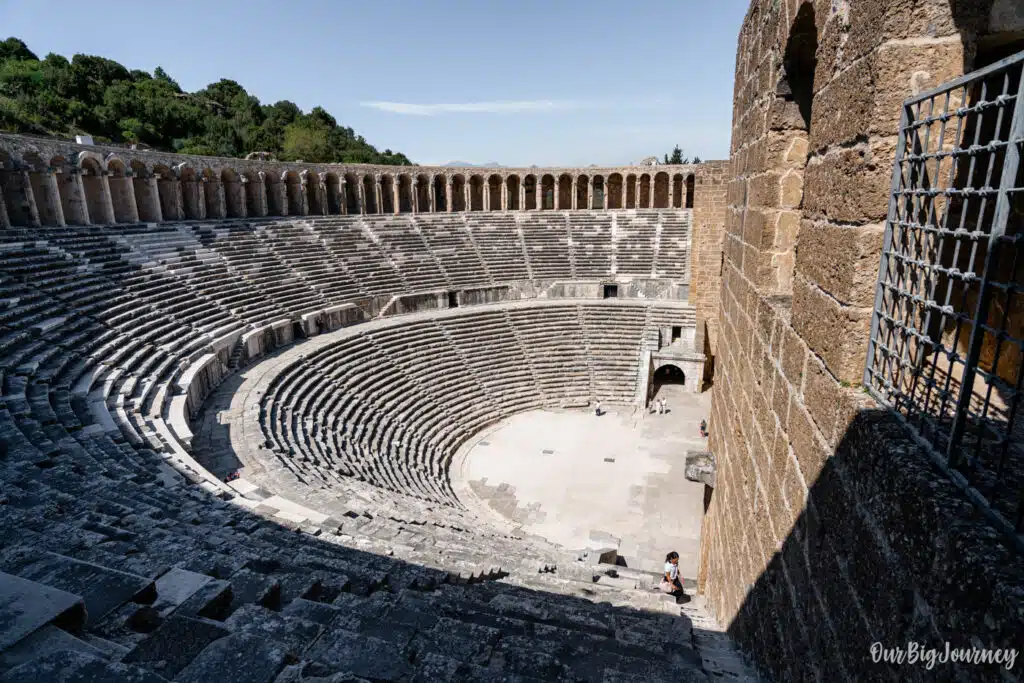
Every September, the theatre transitions from a museum into a living venue for the Aspendos International Opera and Ballet Festival.
- The Vibe: Sit under the stars on 2,000-year-old stone while world-class troupes perform classics like Aida, Swan Lake, or Carmen.
- To Consider: Rent a seat cushion from the vendors outside (bare limestone is brutal on the spine). Wear flat shoes for the steep stairs, and book early. To protect the ancient ruins, modern crowds are capped at about 4,000 people per night.
Fire of Anatolia
We also saw some billboards for the show Fire of Anatolia in the area. Unfortunately, we couldn’t make it to this hyper-athletic, pyrotechnic show, with tons of ancient history baked into the choreography.
- The Spectacle: This world-famous dance troupe features over 120 performers on stage, blending traditional Turkish folk dances with ballet and acrobatics. They tell the mythological story of the Anatolian region through synchronized stomping, swirling costumes, and dramatic drumming.
- The Flex: They hold a Guinness World Record for the fastest dance performance, clocking in at 241 steps per minute.
- The Setup: They perform their hit shows, “Evolution” and “Troy”, throughout the warmer months (typically April through November).
Pay attention: Depending on the week, the team alternates between the actual Ancient Aspendos Theatre and the Gloria Aspendos Arena. This is another massive, modern stadium built specifically to handle their massive stage production and pyro setups. Check your ticket carefully so you don’t show up to the wrong arena!
Aspendos, Amphitheater or Theatre?
If you searched for the “Aspendos amphitheater” to plan your trip, sorry to say this but you’re factually wrong. Aspendos is undeniably a theatre. It was built for the arts.
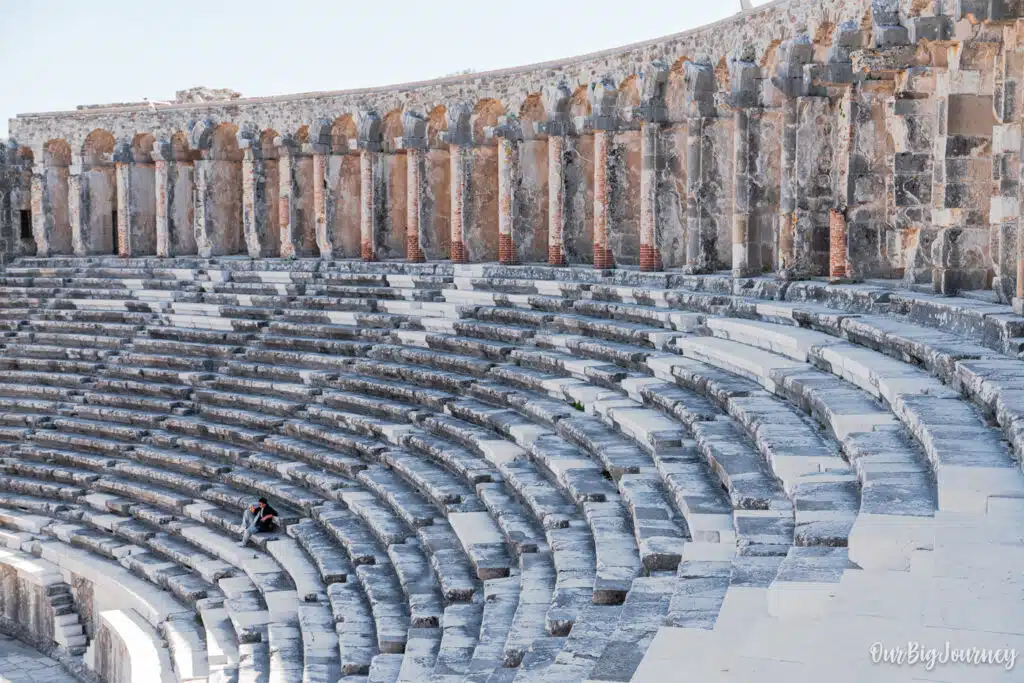
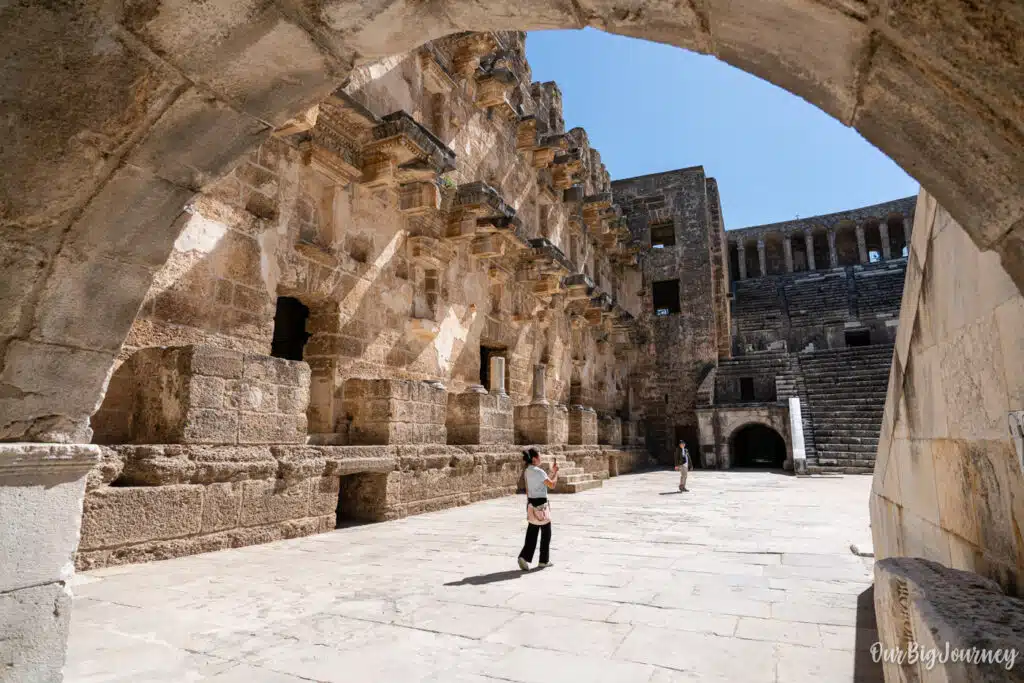
Local tour operators routinely use the word “amphitheater” because it sounds grander to the average tourist, but the distinction matters to anyone who appreciates history. A theatre is a semi-circle engineered for dramatic plays and acoustic perfection. An amphitheater is a full circle or oval designed for watching gladiators and wild animals tear each other apart, like the famous colosseum in Italy.
Some tips for your visit to Aspendos Theatre
If you are planning a trip from the Antalya region, these are our recommendations for the visit of Aspendos Theatre:
- Avoid the midday hours: The Mediterranean sun is unforgiving. The theatre is a massive stone bowl designed to trap sound, but it can also work as an efficient oven. Skip going there (if you can) between 12:00 and 16:00. To explore it well, you have to climb stairs and walk to different angles.
- Look Beyond the Theatre: The vast majority of tour buses drop passengers off at the theatre and leave an hour later. If you walk up the path behind the structure, you will find the ruins of the ancient Acropolis. This area includes a basilica, a commercial agora, and the remains of the aqueduct. It is completely empty, providing a welcome escape from the crowds.
- Entry cost: Admission is around €15 (or included in the regional Museum Pass). Unlike many overhyped tourist destinations, the fact that you are standing in the world’s most pristine Roman theatre actually justifies the ticket price.
- No drones are allowed: You’ll see many poster indicating drones are banned in and around the theatre.
Our honest verdict
The Aspendos theatre in Turkey is one of the few historical landmarks that genuinely lives up to the marketing material. It serves as a reminder that the Romans were not just historical figures. Considering this is the best maintained Roman theatre in the world, I would classify this a must visit in the area and in Turkey if you can make it. Even if you’re not a history lover, you can have a perfect idea about the representations they performed here, about the acoustics and about the general vibe of this remarkable place.
Check all our posts about Turkey: