Visiting Auschwitz in Winter | What to Expect
By Roberto (Updated Dec 25)
⏱ 8 minutes
Visiting Auschwitz from Krakow at any time of year is a deeply emotional experience, but visiting Auschwitz in winter has a particular weight to it. The intense cold… the silence and the snow over the barracks… everything feels more intense, more real, and more reflective. I’m not going to lie, this is a visit in Poland that made us feel a lot of emotions, and we personally think visiting this prison camp in Winter adds a rawness that reminds you, in a very physical way, of what prisoners endured here.
This post helps you prepare for the visit so you can make the most of this important and special place.
Table of Contents
Why Visit Auschwitz in Winter
The atmosphere and weather’s impact on the visit
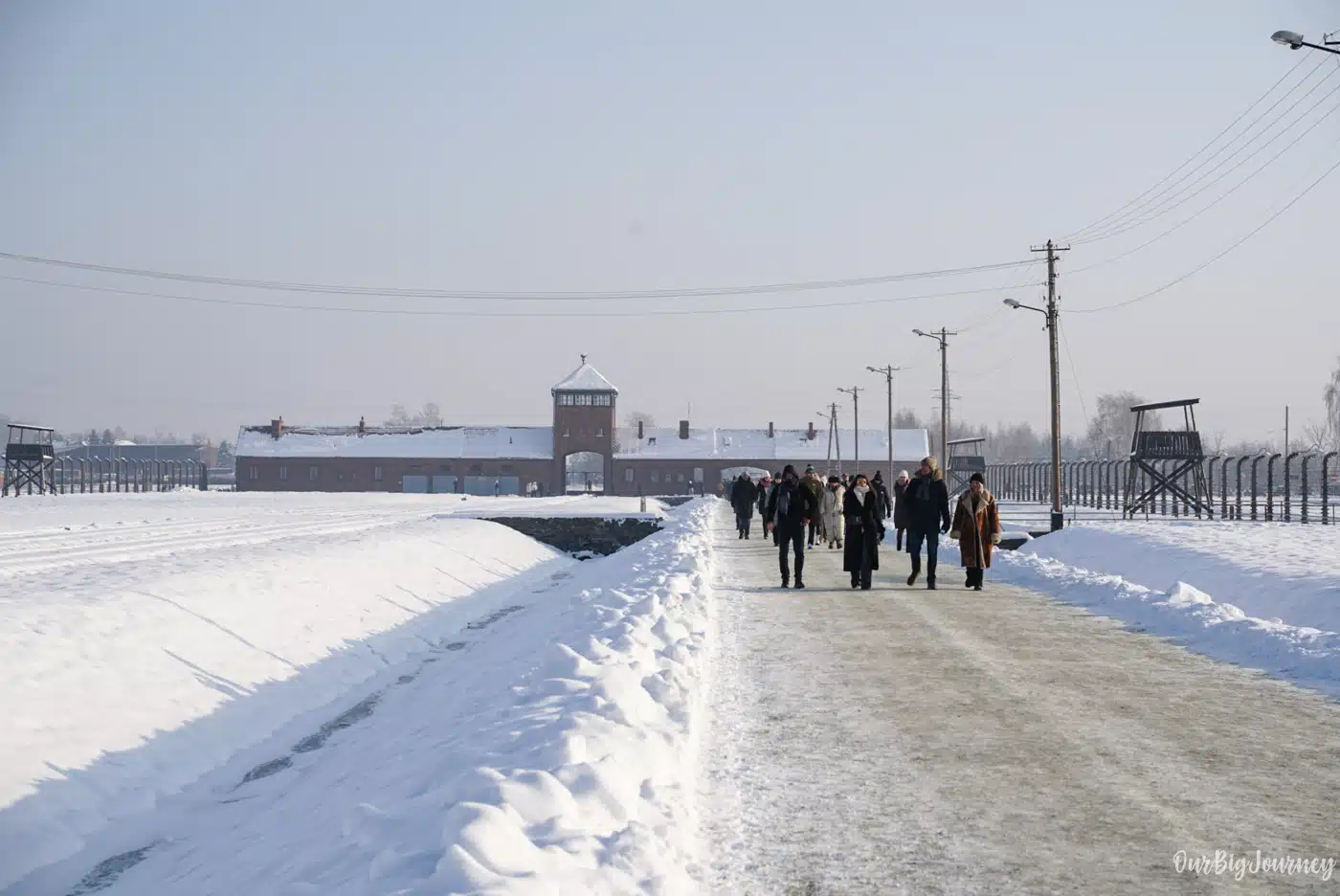
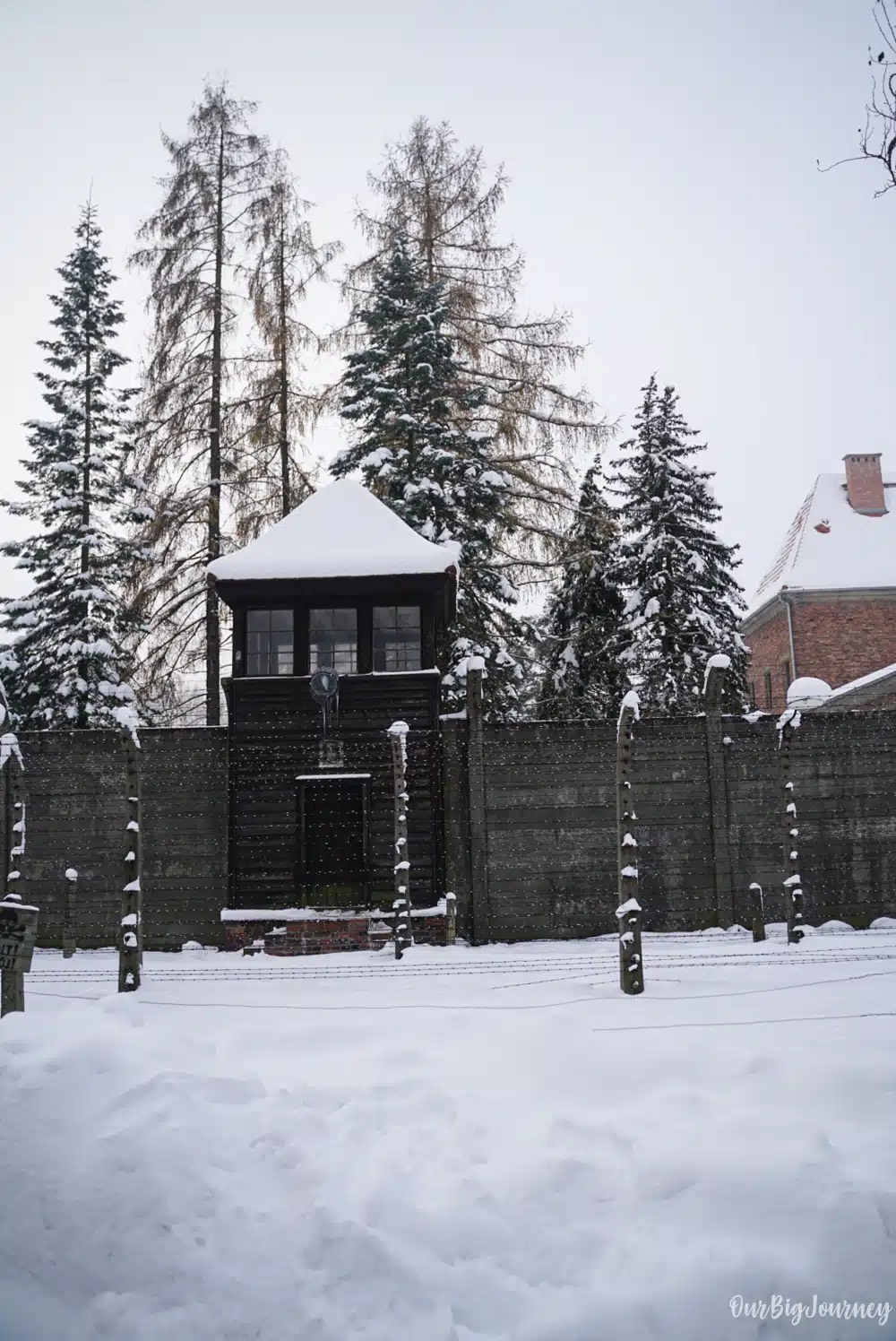
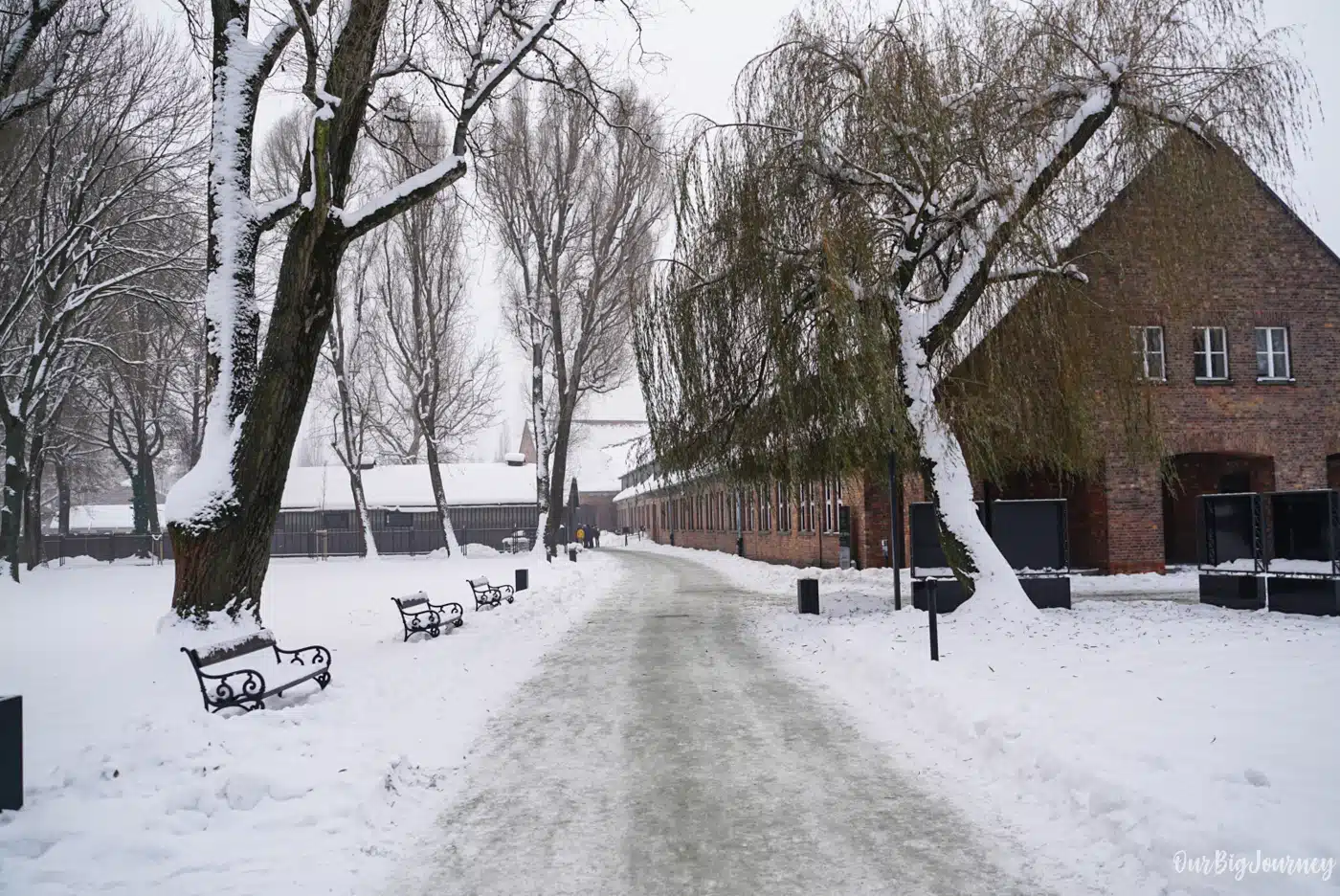
If you visit Auschwitz in winter, expect temperatures between -5°C and 5°C. Polish winters tend to be quite cold. The ground is often frozen or with snow and the muted colours of the place make the site feel…I don’t know, both eerie and calm. It’s hard to describe. But I’m going to try it throughout this post.
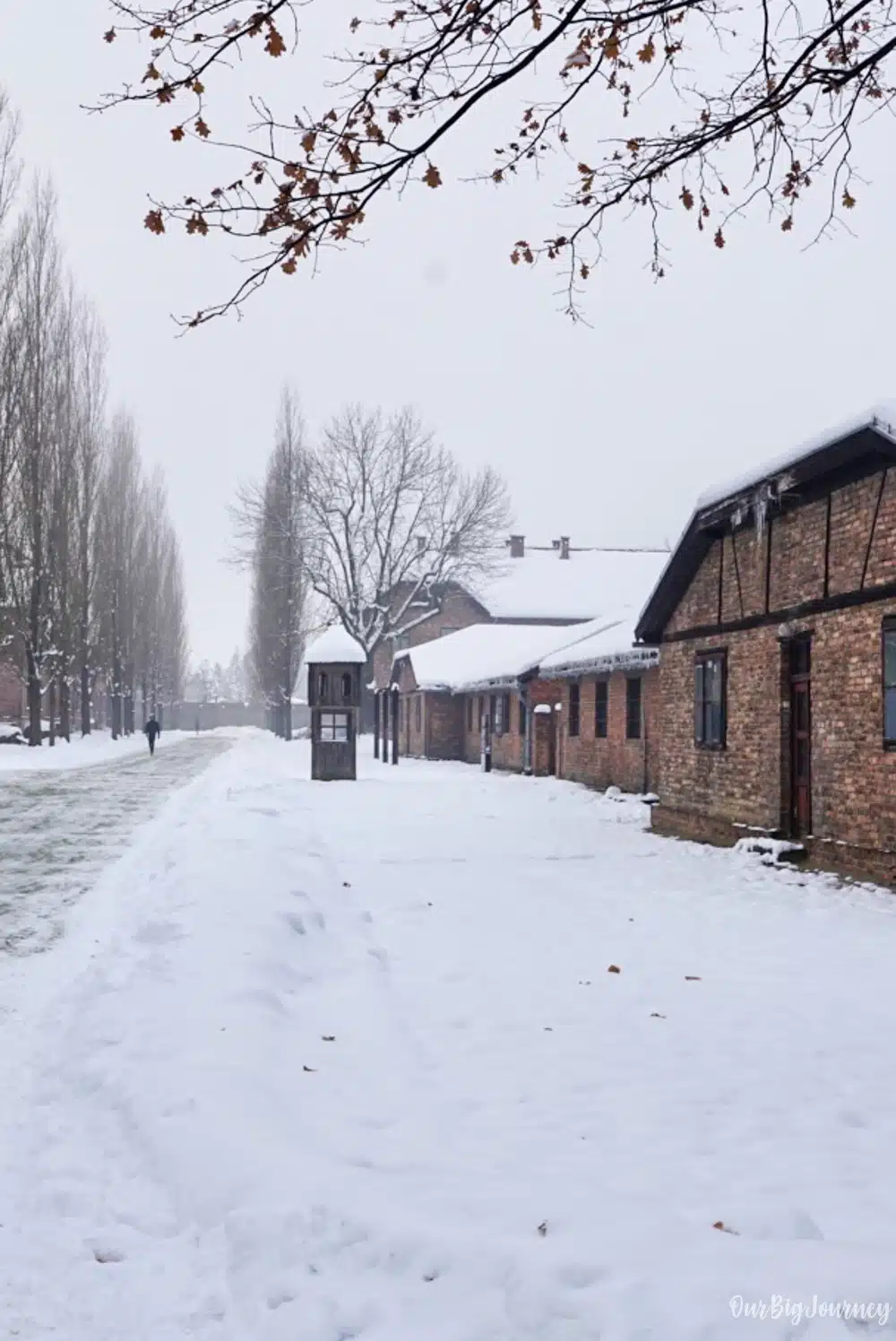
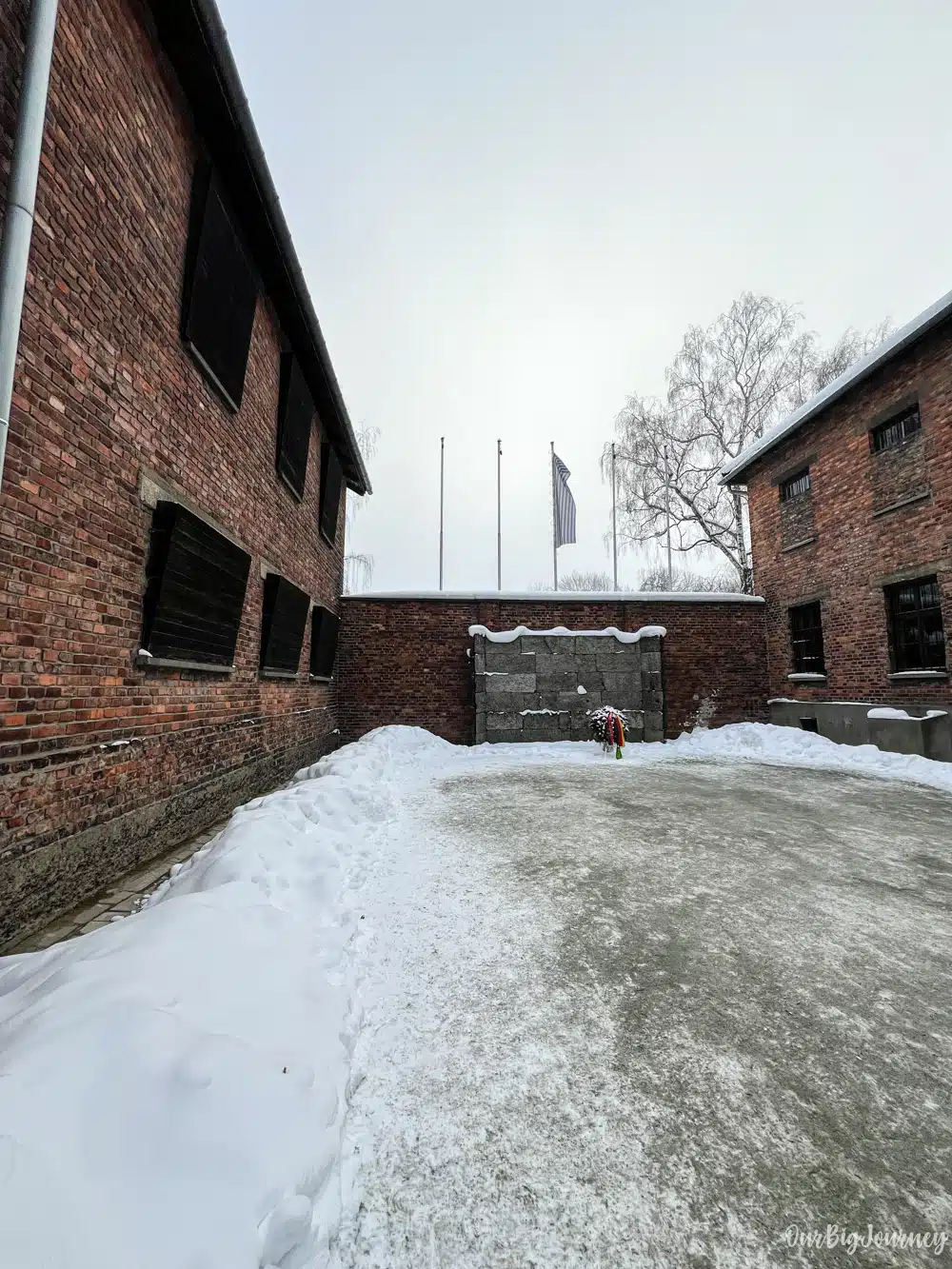
I have known enough history about the prison camp, how they treated the prisoners and the severe conditions, but the visit surpassed my expectations. I suppose everything feels different when you are staring at the barracks, the walls where the Nazis executed prisoners or when you feel the cold. It’s the latter one that you can only feel in winter, because you, with your warm jacket, good boots and gloves get an idea of the crazy conditions the prisoners had to endure with little more than thin uniforms and wooden clogs. I thought about many things there, but the cold was always present.

Seeing the camp in these conditions makes the history of Auschwitz feel painfully real. I could agree with many travelers that say winter offers the most powerful emotional experience to visit the camp. Even today, more than two years later I remember the feeling, and the cold.
Fewer crowds and a quieter experience
Auschwitz receives millions of visitors every year, but winter is noticeably quieter. This means guided tours with more calm, less rush between rooms, and more time to dedicate to what you’re seeing.
We went there with a guided group in this activity from Get Your Guide, and we would recommend it. The pick-up van was good, the timing for everything was clear and well organised. The explanations were great and they answered all the questions people had. It didn’t feel like a rush tour at all. Keep in mind that the pick-up time will be really early in order to visit Auschwitz during daylight hours.
Explaining What’s Auschwitz I and Auschwitz II-Birkenau
When people visit Auschwitz, they usually start by Auschwitz and end up in Birkenau. So, are they the same or two different concentration camps? To make it short, Auschwitz was a complex divided into two main areas, Auschwitz I and Auschwitz II–Birkenau, each with its own role and story. They were different parts from the same concentration camp, separated by 3 kilometres or short trip by bus.
Auschwitz I: The Original Camp
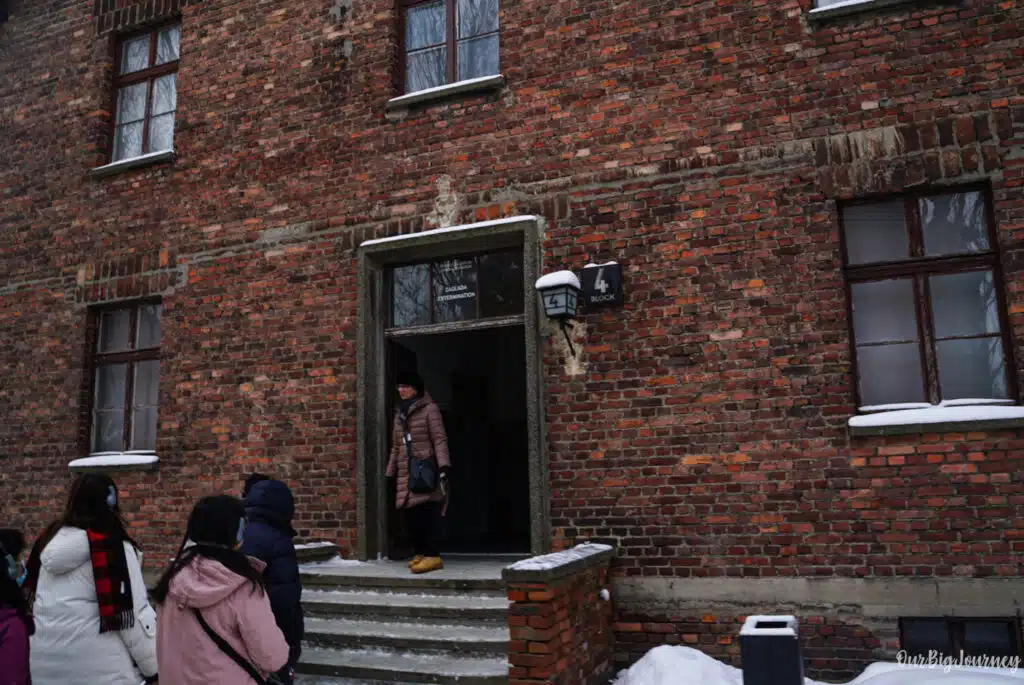
Auschwitz I was the first camp, established in 1940 in former Polish military barracks. It served as the administrative heart for the entire Auschwitz complex and initially held political prisoners, mostly Poles, before expanding to include people deported from across Europe. It also worked as a labour camp, where prisoners endured hard work and punishments. Auschwitz I has brick buildings with different facilities and a more compact layout, giving a very different feeling from Birkenau.
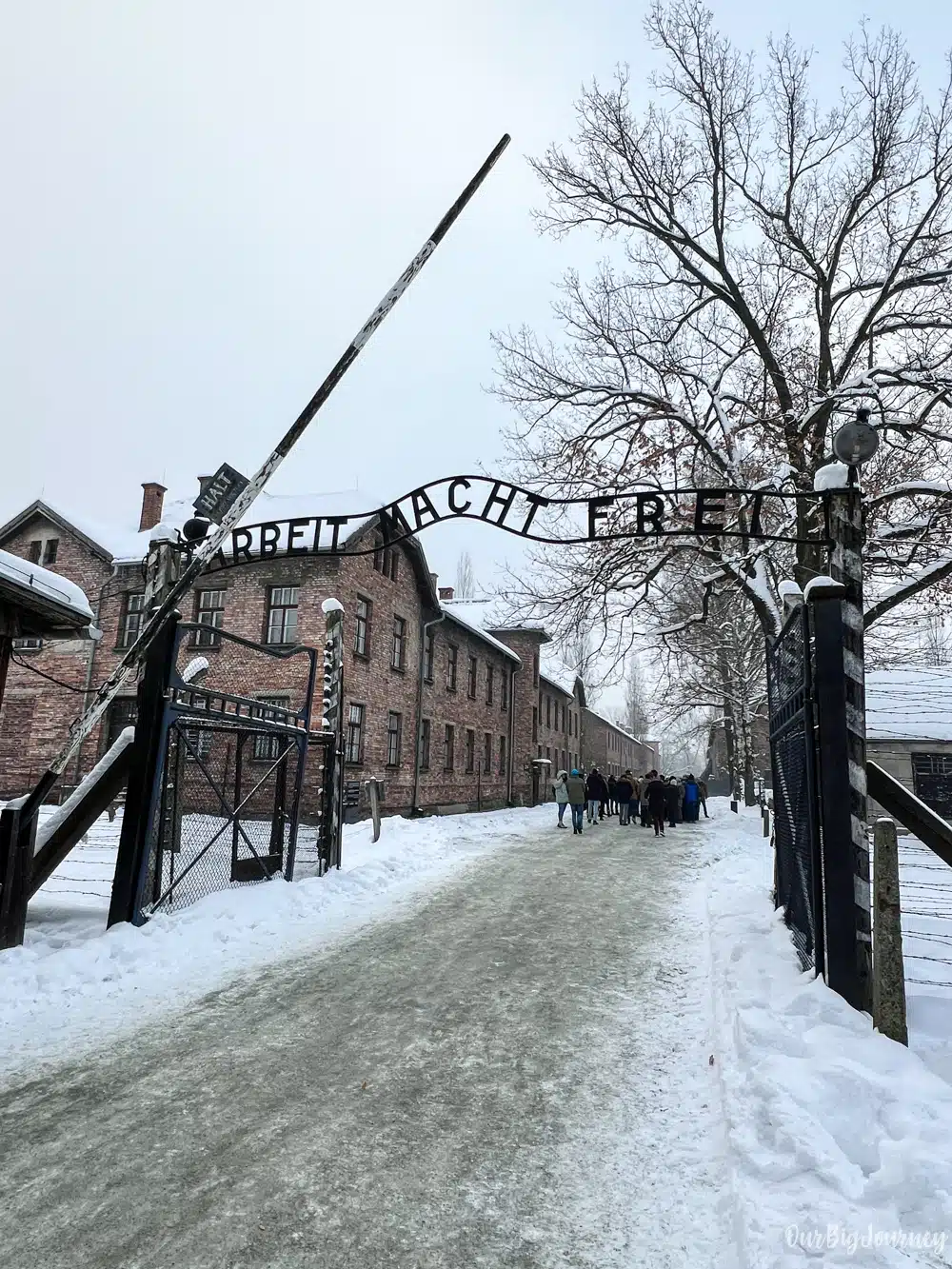
Today, Auschwitz I is where the main museum exhibitions are located, with rooms filled with personal belongings, photographs, and historical documentation that humanise the victims. It has the “Arbeit macht frei” gate, the partly reconstructed gas chamber, the execution wall, and other creepy areas where prisoners endured brutal punishments. In my own words, Auschwitz I, gives a punch of sad and somber emotions despite the small size of the camp. Visiting the camp in winter makes these feelings more profound.

Auschwitz II-Birkenau: The Extermination Centre
Auschwitz I is where the system was organised and perfected before the camp expanded to industrial-scale killing following the Nazi ideals. Birkenau, built in 1941–42, was designed for one primary purpose: mass murder. The camp is enormous and once held up to 90,000 prisoners at a time. Most of the victims of Auschwitz died here, many within minutes of stepping off the trains.
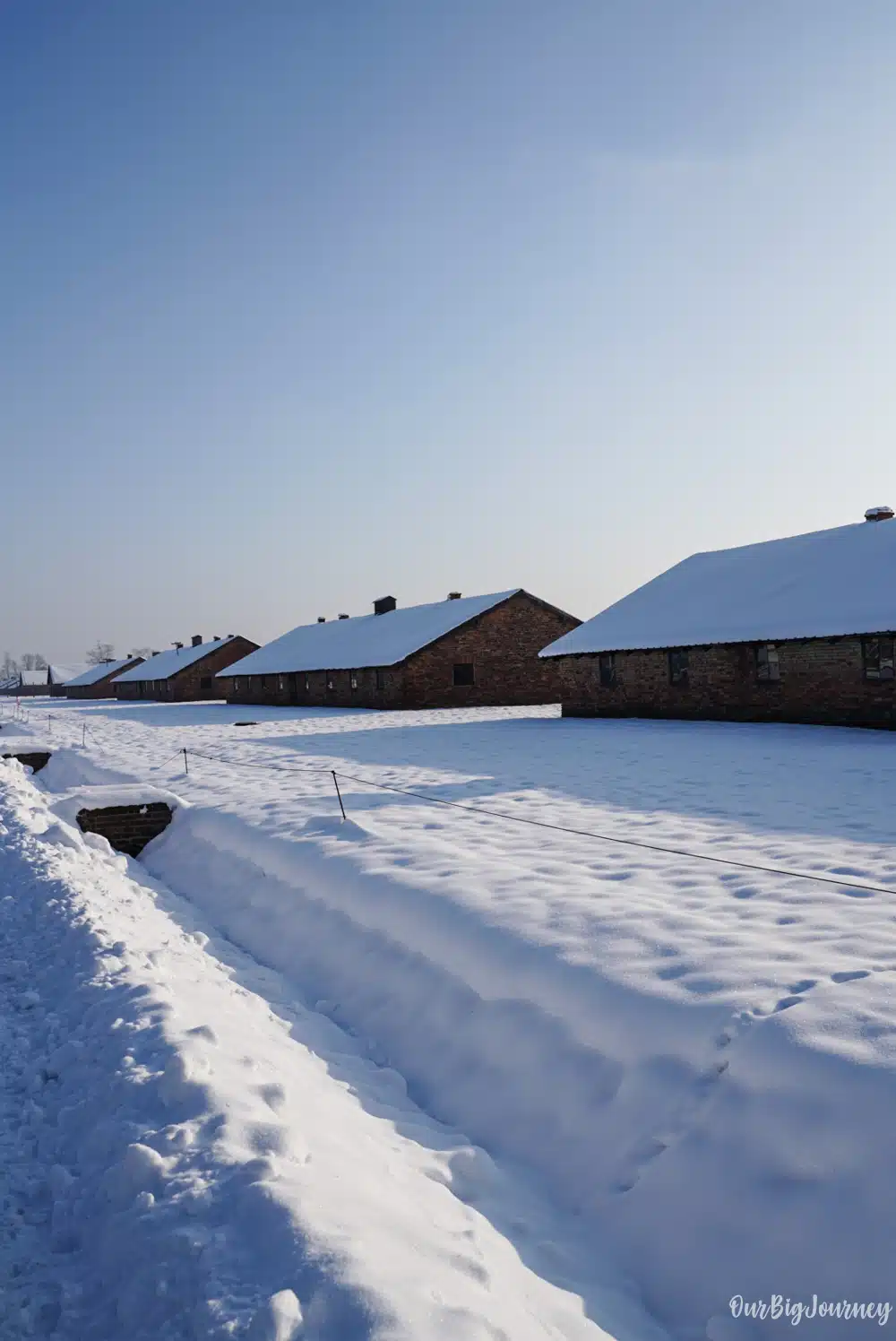
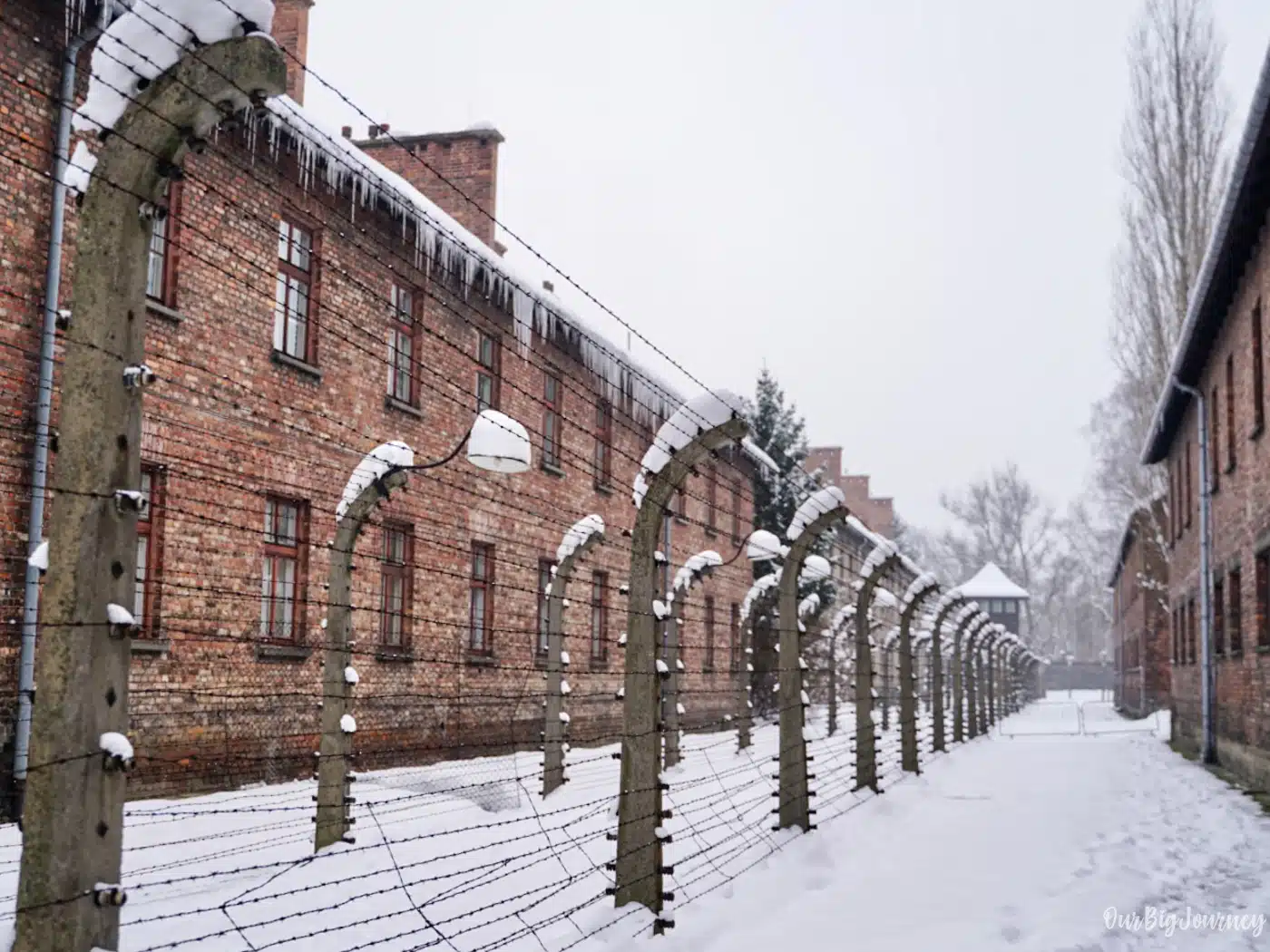
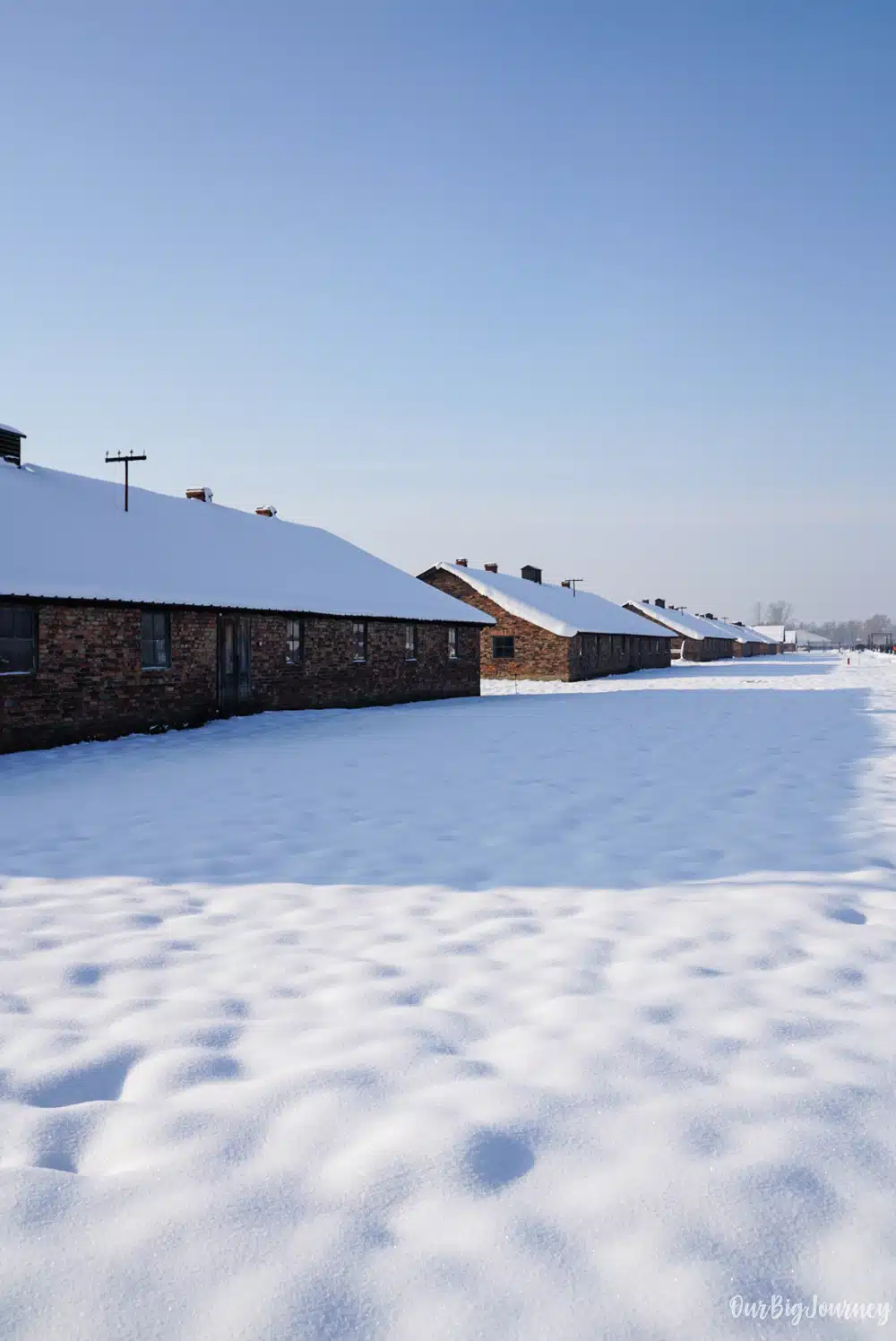
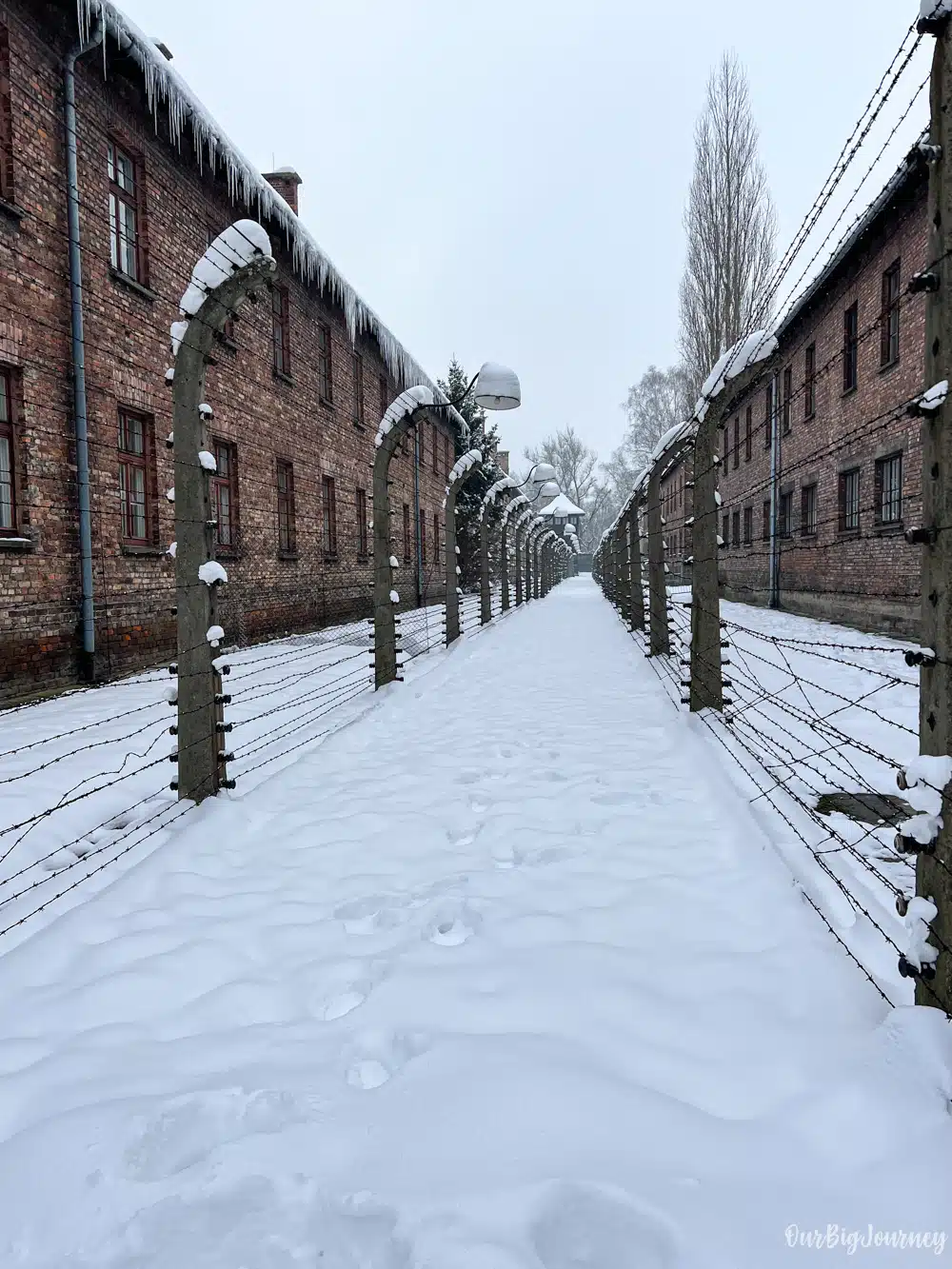
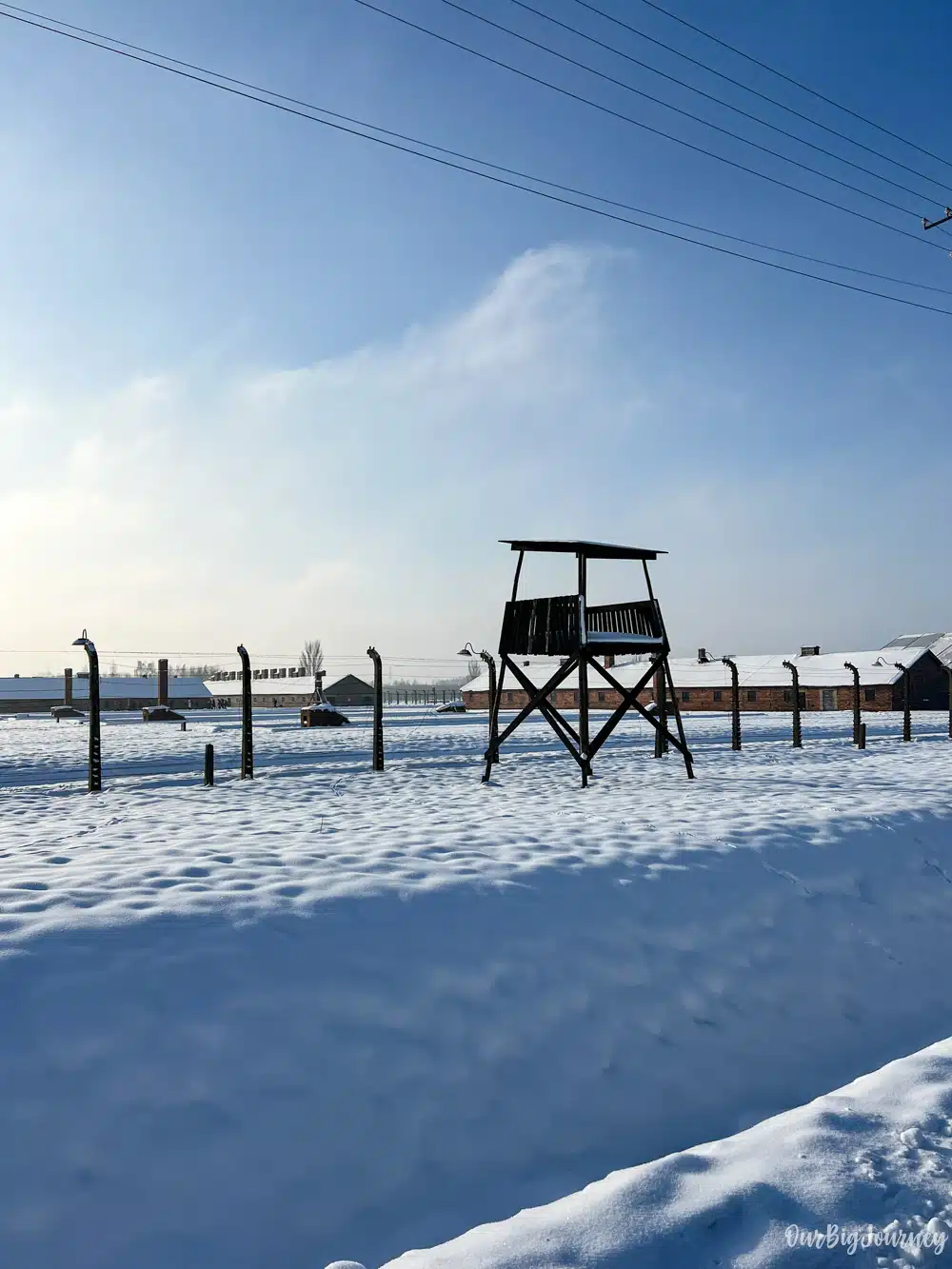
Birkenau feels overwhelming from the moment you arrive. With many long rows of wooden barracks, endless barbed-wire fences, and the infamous main gate with train tracks running through it. Visiting Birkenau highlights the immensity and systematic nature of the Holocaust, offering a sobering contrast to the more contained environment of Auschwitz I. In our visit to Auschwitz in winter, the immense fields had snow, the barracks were extremely cold and the silence was giving void chills. Birkenau, with the ruins of the four gas chambers, breaks your soul, giving dehumanising feelings, and uncertainty.
What to Wear for Visiting Auschwitz in Winter
Proper winter clothing
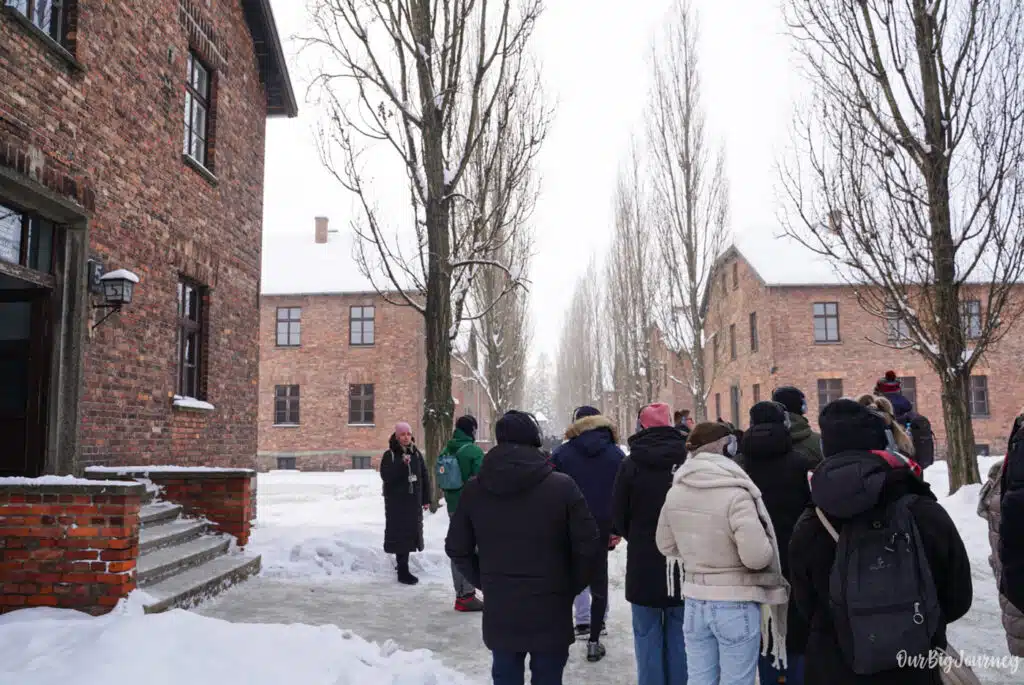
Think that you’re going to be more than 3 hours walking in streets, going inside buildings, barracks… and also exposed to winds. It’s COLD AF. So better bring proper winter clothing. You don’t need to be fancy here, you need to be warm. I would suggest bringing:
- Mandatory: good socks and winter boots.
- A warm, insulated winter coat
- Thermal leggings or base layers
- Thick trousers or waterproof pants if snow is forecasted
- A warm scarf
- A hat that covers your ears
- Warm gloves
What NOT to wear
Avoid at all costs:
- Trainers or canvas shoes
- Thin coats
- Jeans (they get cold and wet easily)
- Any shoe with a flat, slippery sole
How to Get to Auschwitz in Winter
Tours including transport
This is the one we did. If you don’t have a car or don’t want to drive, make sure the tour has transport included. Winter tours tend to run with smaller groups, and the huge advantage is not having to think about logistics or parking.

If you’re visiting with kids or elderly relatives, this is definitely the easiest option.
From Krakow by bus
Most travelers visit Auschwitz as a day trip from Krakow. Buses run all year and are reliable even in winter conditions. They drop you directly at the museum entrance and return multiple times throughout the day. This option is easy, budget-friendly, and warm enough for winter travel.
Driving in winter conditions
If you’re driving, be prepared for typical winter roads with icy patches, fog, or snowfall. The route to Oświęcim (Auschwitz) is well-maintained, and parking is available, but extra caution is needed. Start earlier than you would in summer.
Respectful Behavior and What to Keep in Mind
The emotional impact
Auschwitz isn’t a typical tourist attraction. Winter amplifies the emotional weight of the visit. I read some blogs that said they saw people overwhelmed. In our case we didn’t see anybody crying but we could see many expressions on people’s faces. Honestly, we were a bit shocked in certain rooms or places, thinking and feeling strong emotions. It was this mix of astonishment and sadness. Even today, when I remember this, it surprises me how these things were possible and how a part of humankind were able to do these horrific actions.
Anyways, if you feel a strong sense of mourning or become very sad, you can step aside or “disconnect” from that part of the tour. I remember I saw people moving fast inside the gas chambers…
“Unwritten Rules” for photography
Photography is allowed in many areas but not everywhere. I’m sure you’ve seen these dumb people taking Instagram photos on the train rails, or in the barracks, or worse photos… Please avoid selfies, posing, or anything that could be seen as disrespectful. There was enough stupidity made there.
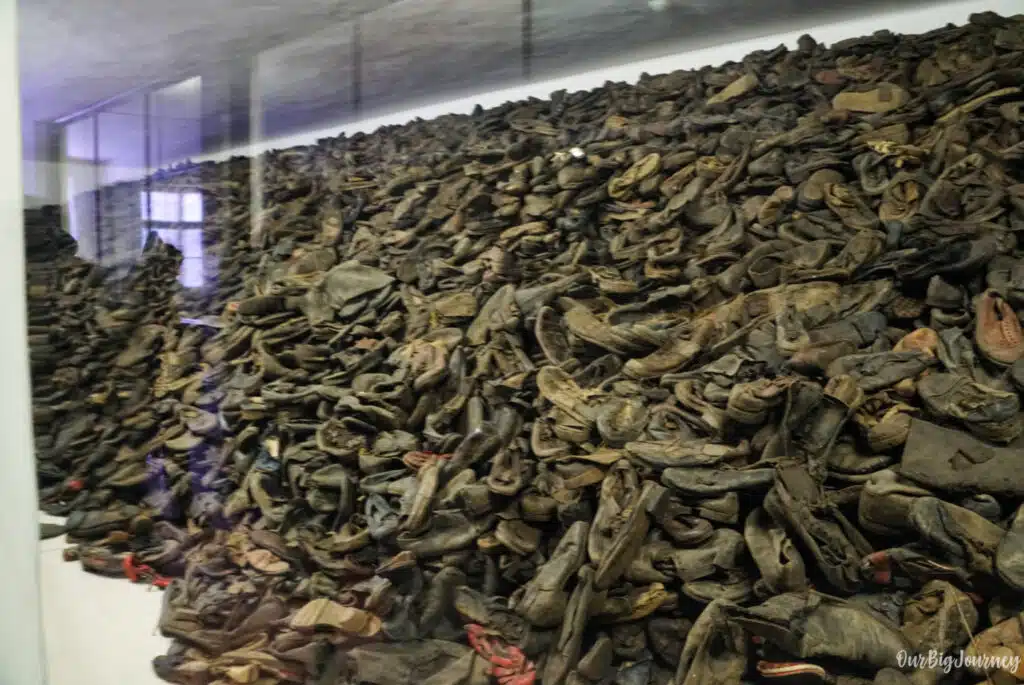
I’m confessing here that I didn’t want to take or have certain photos because it gave me bad vibes. I don’t believe in paranormal activities, but the energy felt so… dense. We didn’t want to have photos of us next to hundreds of glasses or personal items they removed from the prisoners. Actually, this is the only post we have on our blog where there is not a single photo of us.
How to talk to kids if traveling as a family
Auschwitz is not recommended for younger children because they (purely my opinion) won’t understand the concept and if they get it, they are going to struggle assimilating it. It’s like a bad joke. But older kids or teens may visit if you guide them gently. I would say explaining the historical gravity in a sensitive way, and omitting macabre details. Also, in winter, the conditions can make the visit more challenging, so check how they’re coping as you move through the site.
Final Thoughts on Visiting Auschwitz in Winter
Visiting Auschwitz in winter is a powerful experience for understanding history. The cold, the silence, and the stark atmosphere bring emotions to the next level. Winter doesn’t just show you the place, it makes you feel it.
Dress warmly, respect, prepare emotionally, and take your time to process everything you see. This is a visit that stays with you, and winter only deepens its impact.